





The Weekly Cascade of Junk
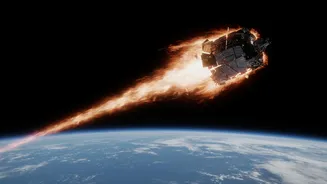
The idea of a tonne-scale object returning weekly isn't about a single, specific piece of debris making a regular pass. Instead, it refers to the alarming new average rate of re-entry. According to space situational awareness experts, roughly one metric
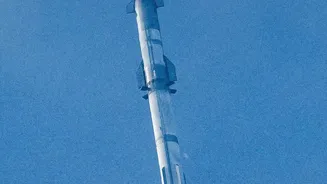
tonne of defunct hardware—spent rocket bodies, dead satellites, and other large fragments—is now falling from orbit into the Earth's atmosphere every week. This isn't science fiction; it is a measurable consequence of the exponential increase in rocket launches over the past decade. While most of this material burns up upon re-entry, creating spectacular but harmless fireballs, heavier and more robust components like titanium fuel tanks and engine parts can and do survive the fiery descent, sometimes striking the ground. Recent incidents, like a large metal rocket component crashing into a farm in Kenya, underscore that this is no longer a purely theoretical risk.
An Orbit Crowded with Hazards
The junk that falls back to Earth is only a fraction of the problem. The vast majority of orbital debris remains in space, posing a significant threat to the operational satellites that underpin our modern economy. As of 2026, tracking networks monitor over 36,000 objects larger than 10 centimetres. However, only a fraction of these are active satellites; the rest are debris. Add to that an estimated 1.2 million objects between 1 and 10 centimetres, and over 140 million smaller fragments, and the picture becomes clear: low Earth orbit is an increasingly hazardous environment. These objects travel at mind-boggling speeds of over 27,000 km/h. At that velocity, a collision with even a centimetre-sized fragment can be catastrophic, capable of destroying a multi-million dollar satellite and creating thousands of new pieces of debris in the process.
Why This Celestial Junkyard Matters to India
This isn't just a problem for other countries. The Indian Space Research Organisation (ISRO) operates a fleet of more than 50 satellites crucial for communication, weather forecasting, navigation, and national security. Each one is a potential target. The risk is so pronounced that ISRO now performs dozens of collision-avoidance manoeuvres each year, a number that has risen dramatically. Losing a key satellite to debris would not just be a financial loss; it could disrupt everything from banking transactions and GPS services to disaster management. Recognising this threat, India has proactively developed its own defence system. Project NETRA (Network for space object TRacking and Analysis) is ISRO's indigenous early warning system, designed to detect and track debris to protect the nation's valuable space assets. This system, which includes dedicated radars and telescopes, gives India an independent capability to monitor its orbital neighbourhood, reducing reliance on foreign data.
The Slow-Motion Kessler Syndrome
Scientists have long warned of a scenario called the Kessler Syndrome, where the density of debris in orbit becomes so high that collisions create a runaway chain reaction. Each impact would generate more debris, which in turn increases the probability of more impacts, until low Earth orbit becomes an unusable minefield for decades or even centuries. While a full-blown cascade hasn't happened yet, the constant addition of new satellites and debris from breakups and anti-satellite tests is pushing us closer to that tipping point. The weekly re-entry of tonne-scale objects is a sign that our orbital environment is saturated. We are, in effect, witnessing the Kessler Syndrome in slow motion, where the growth of debris is constant and accelerating.
Cleaning Up Our Cosmic Backyard
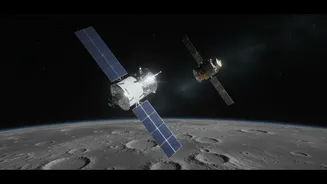
The solution to space debris is twofold: mitigation and removal. Mitigation involves designing rockets and satellites to create less debris in the first place. This includes measures like de-orbiting satellites at the end of their life and ensuring spent rocket stages make a controlled re-entry rather than being abandoned in orbit. International guidelines are improving, but compliance isn't universal. The more complex challenge is active debris removal—essentially sending up cosmic garbage trucks to capture and de-orbit the most dangerous pieces of existing junk. Various concepts are being explored, from robotic arms to giant nets, but these technologies are expensive and technologically challenging. ISRO is also looking ahead, with plans to integrate Project NETRA with future missions aimed at achieving zero-debris launches by 2030 and exploring active removal technologies with domestic start-ups.