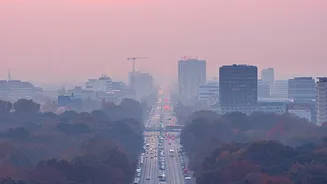







An Annual November Crisis
For residents of Delhi, November brings a familiar and unwelcome guest: a thick blanket of toxic smog. As of mid-November 2026, air quality has consistently hovered in the 'very poor' to 'severe' categories, with the Air Quality Index (AQI) frequently
surpassing 300 and at times 400 in several locations. This annual crisis is a complex cocktail of factors, including smoke from post-harvest stubble burning in neighbouring states, vehicular emissions from Delhi's congested roads, industrial pollution, and construction dust. Compounding the problem, cooler winter temperatures create a phenomenon known as temperature inversion, which traps these pollutants close to the ground, preventing them from dispersing and turning the city into a virtual gas chamber.
What Exactly Are Fine Particles?
The primary culprit behind the health alerts is PM2.5—fine particulate matter so small it measures 2.5 micrometres or less in diameter. To put that in perspective, a single human hair is about 30 times wider. Unlike larger dust particles that get filtered out by our nose and throat, PM2.5 can penetrate deep into the lungs and even pass directly into the bloodstream. These particles aren't just dust; they are a toxic mixture of solid and liquid droplets, including black carbon, nitrates, sulfates, and heavy metals. Their minuscule size allows them to bypass the body’s natural defences, carrying harmful compounds to every major organ.
The Body Under Long-Term Siege
While short-term exposure causes familiar symptoms like coughing, sore throats, and irritated eyes, the real danger of PM2.5 lies in long-term, repeated exposure. Scientific studies have established a clear link between chronic exposure and a host of life-threatening diseases. The constant inflammation caused by these particles puts immense strain on the cardiovascular system, leading to an increased risk of high blood pressure, heart attacks, strokes, and irregular heartbeats. The lungs bear the initial brunt, with risks including the aggravation of asthma, the development of chronic obstructive pulmonary disease (COPD), reduced lung function, and even lung cancer.
A Threat to the Brain
Perhaps most insidiously, emerging research highlights the profound impact of air pollution on the brain. Ultrafine particles that enter the bloodstream can cross the blood-brain barrier, causing neuroinflammation and oxidative stress. This has been linked to a range of neurological and cognitive problems. Studies suggest long-term exposure can accelerate brain aging and is associated with a higher risk of dementia, Alzheimer's, and Parkinson's disease. In the shorter term, it can lead to headaches, difficulty concentrating, and memory lapses—symptoms that many city dwellers might dismiss as simple fatigue but could be signs of the brain under environmental stress.
Who Is Most at Risk?
While no one is immune, certain groups are disproportionately affected by severe air pollution. Children are particularly vulnerable because their lungs and brains are still developing, and exposure can lead to stunted lung growth and potential neurodevelopmental issues. The elderly, whose immune systems and lung functions are naturally weaker, face a higher risk of acute episodes and mortality. Pregnant women are also a high-risk group, with studies showing pollution can affect fetal development and lead to premature birth. Finally, individuals with pre-existing conditions like asthma, heart disease, or other respiratory ailments are at immediate risk of their conditions worsening severely during high-pollution days.