



Hunga Tonga-Hunga Ha’apai, 2022: The Unprecedented Blast
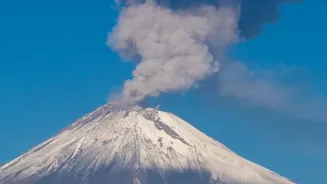
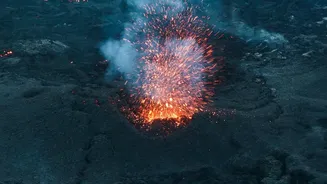
On January 15, 2022, a submarine volcano in the Tongan archipelago unleashed the largest atmospheric explosion recorded by modern instruments. The Hunga Tonga-Hunga Ha'apai eruption was staggering in its scale, sending a plume of ash and gas a record-breaking
58 kilometres into the atmosphere. The blast itself was heard as far away as Alaska. More than just a loud bang, the eruption triggered a complex tsunami. Waves were generated not only by the underwater explosion but also by the powerful atmospheric pressure wave that circled the globe multiple times. These waves caused devastation across Tonga, affecting some 80% of its population, destroying villages, and severing communication cables. The tsunami's reach was global, causing fatalities as far away as Peru. With a Volcanic Explosivity Index (VEI) of 5 to 6, it stands as the most powerful eruption of the 21st century to date.
Eyjafjallajökull, 2010: The Economic Shutdown
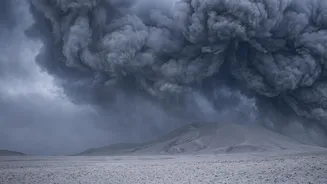
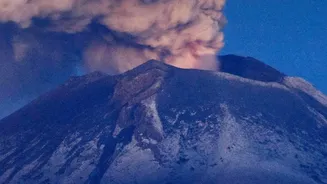
Some eruptions are devastating not because of lava, but because of ash. In April 2010, the eruption of Eyjafjallajökull in Iceland demonstrated this with stunning effect. While the eruption itself was not exceptionally large, its fine-grained ash cloud drifted directly into some of the world's busiest airspace. The result was the largest shutdown of European air travel since World War II. For nearly a week, skies fell silent as over 100,000 flights were cancelled, stranding millions of passengers. The economic impact was immense. The airline industry lost an estimated $1.7 billion in revenue. But the ripple effects went further, crippling industries that rely on air freight. For example, Kenya's fresh flower and vegetable industry lost millions of dollars a day, unable to export its perishable goods to Europe. The event was a stark lesson in the fragility of our interconnected global economy, brought to a standstill by a single volcano.
Mount Merapi, 2010: The Pyroclastic Threat
Later that same year, Indonesia’s Mount Merapi showed a more direct and deadly form of volcanic fury. Beginning in late October, Merapi began a series of violent eruptions that were its largest in over a century. The primary threat came from pyroclastic flows—fast-moving, superheated clouds of gas, ash, and rock that incinerate everything in their path. These deadly flows swept down the volcano's slopes, killing over 350 people. The disaster forced the evacuation of around 350,000 residents from the densely populated surrounding areas. The eruption blanketed the region in ash, shut down local airports, and caused an estimated $781 million in financial losses. The heroic efforts of Indonesian scientists, who accurately forecasted the escalating danger, and civil authorities who organized massive evacuations, saved tens of thousands of lives from a far worse catastrophe.
Mount Nyiragongo, 2002 & 2021: The Urban Lava Flow
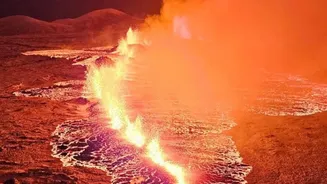
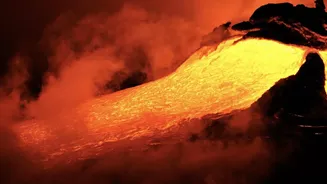
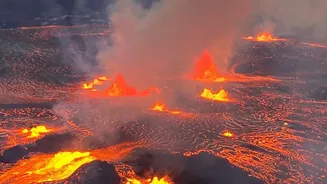
Mount Nyiragongo, in the Democratic Republic of Congo, poses a unique threat due to its proximity to the city of Goma and the unusually fluid, fast-moving nature of its lava. In January 2002, fissures opened on its flanks, sending streams of lava directly into the city. The lava destroyed 13% of Goma, including thousands of buildings, and left 120,000 people homeless. Around 245 people died, many from carbon dioxide asphyxiation. Nearly two decades later, in May 2021, the volcano erupted again with little warning. Lava flows once more descended on the city's outskirts, destroying over 1,000 homes and causing thousands to flee. The 2021 eruption claimed at least 32 lives, many in accidents during the chaotic evacuation. Nyiragongo’s eruptions are a terrifying reminder of the danger faced by communities built in the shadow of active volcanoes.
Cumbre Vieja, 2021: The Relentless Advance
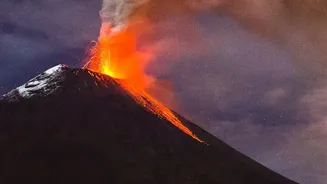
The longest eruption on Spain’s La Palma island in recorded history began on September 19, 2021, and lasted for 85 grueling days. The Cumbre Vieja volcano didn't explode with a single cataclysmic bang but erupted relentlessly, spewing rivers of slow-moving but unstoppable lava. The flows crept across the landscape, consuming everything in their path. While efficient evacuations meant there was no direct loss of life from the lava, the material devastation was enormous. Over 2,800 buildings were destroyed, and valuable farmland and infrastructure were buried under meters of solidifying rock. The eruption forced the evacuation of 7,000 people and caused economic damage exceeding one billion euros, crippling the island's vital agriculture and tourism sectors.