
A 'Black Hole Star' in the Early Universe
Imagine peering back in time to just a few hundred million years after the Big Bang and seeing an object that defies easy categorisation. That's what a team of astronomers has done. They've identified an object, named MoM-BH-1, that at first glance looks
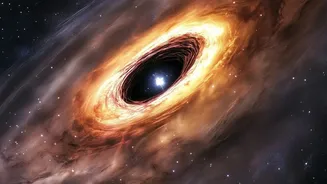
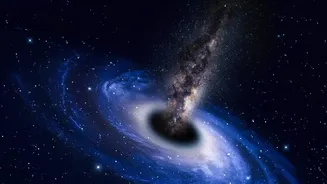
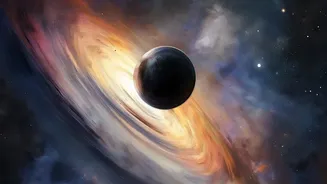
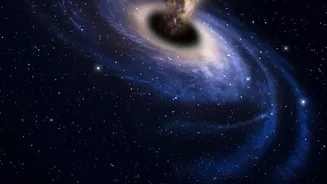
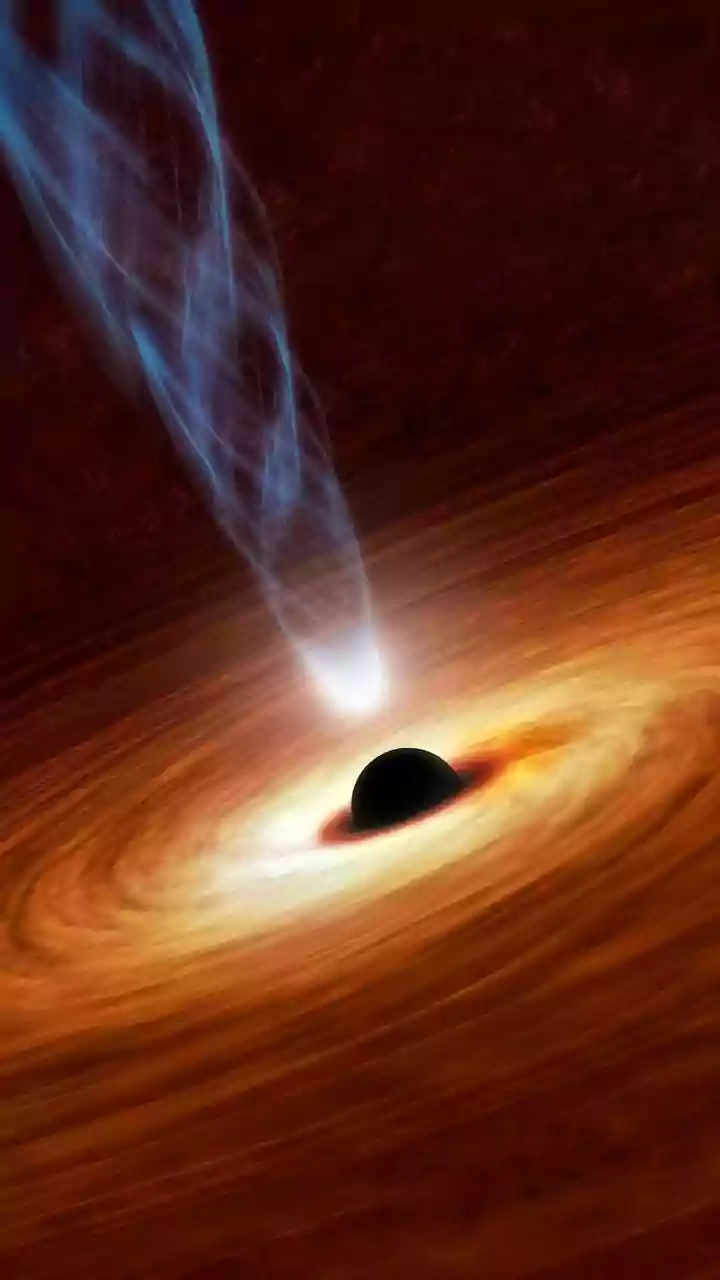
like an enormous star, roughly the size of our solar system. However, it's producing about 100 billion times more energy than nuclear fusion could ever generate in a star of that size. This incredible energy output led researchers to propose a fascinating new model: it’s not a star in the traditional sense, but a massive black hole hidden inside a dense envelope of hydrogen gas.
How Does It Work?
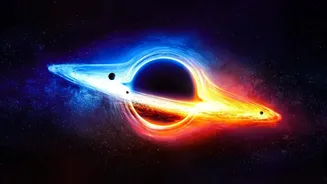
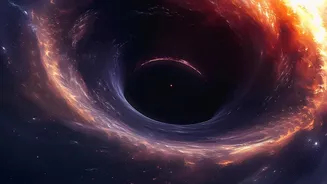
The proposed object is a completely new kind of celestial phenomenon. Instead of being powered by nuclear fusion like our Sun, its energy comes from a central black hole that is actively 'feeding'. As gas and dust from the surrounding cloud fall toward the black hole, the immense gravitational forces heat the material, causing it to release tremendous amounts of energy. This energy is then absorbed and re-emitted by the vast hydrogen cloud wrapped around it, making the entire object glow like a colossal star. The researchers believe the central black hole is about 100,000 times the mass of our Sun, while the gaseous envelope stretches across a region as wide as our solar system.
The Clues in the Light
This discovery was made possible by the powerful James Webb Space Telescope (JWST), which has been scanning the early universe for the most distant galaxies. The object stood out because it was exceptionally bright and unusually red. While a red colour in astronomy often suggests the presence of dust, the light signature from MoM-BH-1 didn't fit that profile. Instead, its light showed almost no elements other than hydrogen and helium. Models showed that an extremely dense screen of hydrogen gas surrounding a feeding black hole could perfectly replicate the unique red colour and light patterns observed by the telescope.
Why This Discovery Matters
This 'black hole star' might be the answer to a puzzle that has intrigued astronomers since the JWST began its work: the existence of numerous 'little red dots' in images of the early universe. If the model is correct, many of these mysterious red objects could be young black holes growing rapidly inside their gassy nurseries. This finding provides a potential new pathway for how supermassive black holes—the giants that sit at the center of most large galaxies, including our own Milky Way—came to be. It suggests a rapid growth phase where a black hole can feed continuously on its surrounding envelope, appearing like a star while it gains mass. This could help explain how some black holes in the early universe grew so massive, so quickly.