

The Power of Two Humble Ingredients
At the heart of this soup are two ingredients that are staples in many Indian kitchens: the drumstick, or moringa, and dal, or lentils. The drumstick, known as 'murungakkai' in Tamil, is not just a vegetable but a nutritional powerhouse. Its pods are prized
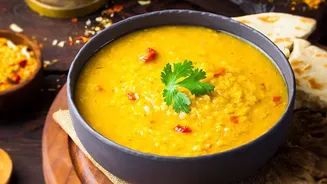
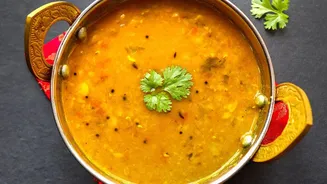
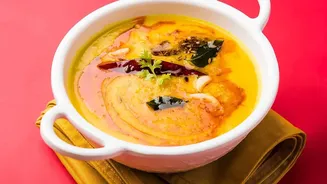
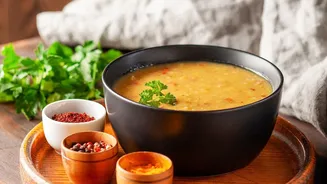
for their delicate flavour and tender pulp. Often found in sambar and curries, the drumstick imparts a unique, subtle sweetness. Dal, typically toor (pigeon pea) or moong (split yellow gram) in this context, forms the creamy, protein-rich base of the soup. Lentils are the backbone of Indian vegetarian cuisine, providing substance, texture, and a wealth of nutrients. Together, they create a soup that is both light and satisfying, a departure from heavier, more complex gravies.
A Symphony of Health Benefits
This soup is more than just comfort food; it's a wellness asset. Drumsticks are packed with essential nutrients. They are an excellent source of Vitamin C, which boosts immunity, and are also rich in iron, calcium, and potassium. The leaves of the moringa tree are considered a superfood, containing significant amounts of protein and antioxidants that help fight inflammation and cellular damage. When paired with dal, the soup becomes a fantastic source of plant-based protein, crucial for muscle repair and growth. The combination is also high in dietary fibre, which aids digestion and promotes a healthy gut. This makes the soup gentle on the stomach and an excellent choice for a light yet fortifying meal, especially during seasonal changes or recovery from illness.
Crafting the Perfect Bowl
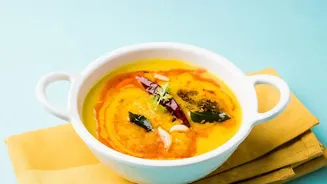
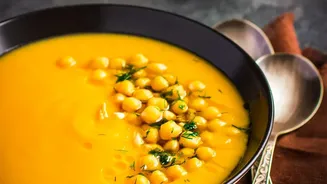
Making this soup is a straightforward process that celebrates the natural flavours of the ingredients. The most common method involves pressure cooking the drumstick pieces along with the dal. Many recipes also include aromatics like onion, garlic, ginger, and tomatoes, which are cooked with the main ingredients to build a flavourful base. Once cooked, the real magic happens. The tender pulp is scraped from the woody drumstick casings and blended into the soup, ensuring all its goodness is retained. The dal, cooked to a soft consistency, provides a naturally creamy texture without the need for heavy creams or cornflour. A final tempering, or 'tadka', of ghee or oil with cumin seeds, asafoetida, and perhaps a few curry leaves, is often poured over the soup to finish, adding a final layer of aroma and flavour.
Variations and Serving Ideas
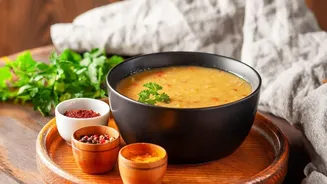
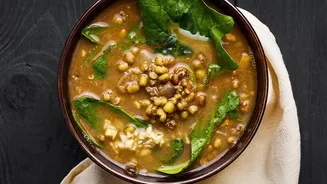
While the classic combination is perfect on its own, this soup is wonderfully versatile. Some variations include adding other vegetables like carrots or a handful of drumstick leaves for extra nutrition. The choice of dal can also change the soup's character; moong dal results in a lighter, quicker-cooking soup, while toor dal gives it a more traditional, hearty feel. For a touch of heat, a slit green chilli or a pinch of black pepper can be added. This soup is typically served hot, garnished with fresh coriander leaves. It can be enjoyed on its own as a light meal or an appetiser. It also pairs beautifully with steamed rice for a more substantial and comforting meal, much like a simple rasam or dal.