




What Is Space Traffic Management?
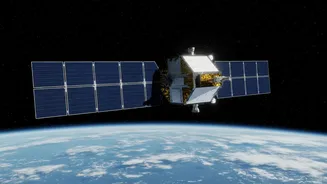
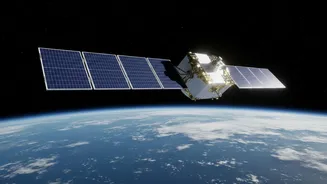
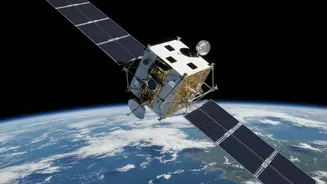
Think of it as air traffic control, but for space. Space Traffic Management (STM) is the broad set of technical and regulatory measures designed to ensure safe access to space, safe operations in orbit, and safe return to Earth. It involves tracking satellites
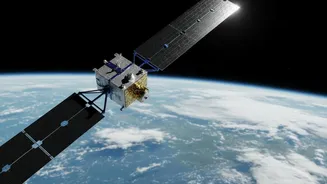
and debris, predicting their paths to anticipate close approaches, and coordinating maneuvers to avoid collisions. This framework is crucial for preventing physical or radio-frequency interference between the thousands of objects orbiting our planet, from tiny fragments to large space stations. As space becomes more congested, STM moves beyond simple tracking, known as Space Situational Awareness (SSA), to actively managing the environment to ensure the long-term sustainability of space activities.
Why the Sudden Urgency?
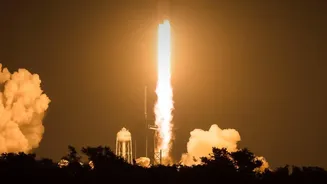
Low Earth Orbit (LEO), the region where most satellites operate, is dangerously crowded. In 2021, more satellites were launched than in the entire previous decade, and tens of thousands more are planned. Today, there are an estimated 36,000 objects larger than 10 cm being tracked, but this is just a fraction of the total debris. This surge, driven largely by commercial mega-constellations like SpaceX's Starlink, has dramatically increased the risk of collisions. A single collision can create thousands of new pieces of debris, each capable of destroying another satellite, potentially triggering a chain reaction known as the Kessler Syndrome that could render certain orbits unusable for generations. Studies show the need for collision-avoidance maneuvers is rising sharply; by early 2025, hundreds of satellites were already making more than 10 such maneuvers a month.
India's Strategy: Project NETRA and Beyond
India, with over 50 operational satellites vital for communication, navigation, and national security, has a significant stake in orbital safety. To protect these assets, the Indian Space Research Organisation (ISRO) is developing its own independent capabilities. The cornerstone of this effort is Project NETRA (Network for space object TRacking and Analysis), an early warning system designed to detect and track objects as small as 10 cm. NETRA uses a network of radars, telescopes, and a control centre in Bengaluru to monitor orbital space and predict threats to Indian satellites. This move towards self-reliance reduces dependency on data from foreign agencies and positions India as a key player in global space security. Looking ahead, India has also announced a "Debris-Free Space Missions" initiative, aiming for all Indian space actors to achieve zero debris creation by 2030.
Focus of the Bengaluru Conference
The recent International Conference on Spacecraft Mission Operations (SMOPS-2026) in Bengaluru served as a critical forum for these discussions. Jointly organised by ISRO and other international bodies, the conference brought together global space agencies like NASA and ESA to address the challenges of managing an increasingly congested space environment. Key themes included the management of large satellite constellations, the use of AI for autonomous mission operations, and the need for international collaboration to create a unified STM framework. The event underscored a global consensus: without coordinated action and clear regulations, the commercial and scientific promise of space could be jeopardised by the very activities meant to unlock it.
New Rules for a New Space Age
In parallel with these high-level discussions, India is already implementing a robust regulatory framework. In July 2026, the Indian National Space Promotion and Authorisation Centre (IN-SPACe) released stringent guidelines for private companies. These rules mandate that any planned re-entry of a space object must have less than a 1-in-10,000 chance of causing a human casualty. Crucially, the guidelines place full liability on the operator for any damage caused during re-entry, encouraging companies to secure third-party insurance and build safety into their mission designs from the start. This proactive regulatory stance is designed to ensure that as India's private space industry blossoms, its growth is both sustainable and safe.