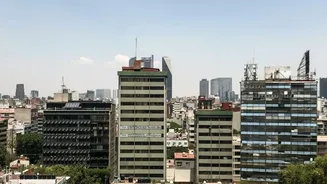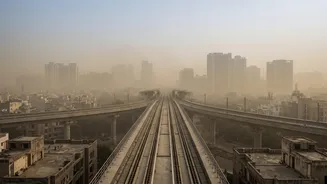






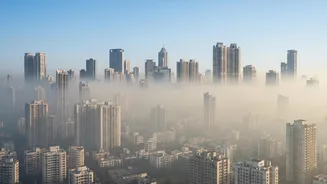

It’s a familiar story for residents of Delhi-NCR: a few weeks of crisp, clear post-monsoon skies, and then, almost overnight, a thick, grey haze descends. How does the air quality go from 'satisfactory' to 'severe' so quickly?
The Monsoon's Retreat
During the monsoon season,
from July to September, Delhi-NCR often enjoys its cleanest air of the year. The combination of easterly winds from the Bay of Bengal and frequent rain washes away and disperses pollutants effectively. This creates a brief period of relief. However, as the monsoon withdraws around late September or early October, this natural cleansing mechanism disappears. The winds die down, the rain stops, and the stage is set for pollutants to begin accumulating once again.
The Weather Puts a Lid on the City
As winter approaches, a crucial meteorological phenomenon known as temperature inversion takes hold. Normally, the air is warmer near the ground and gets cooler at higher altitudes, allowing pollutants to rise and disperse. During an inversion, this pattern flips. A layer of warmer air sits above cooler air at the surface, acting like a lid on the city. This traps all the pollutants—from vehicles, industry, and dust—close to the ground where we breathe. This trapping effect is worsened by lower wind speeds, which prevent the smog from being blown away.
The Unwavering Local Pollutants
While weather creates the conditions for a pollution spike, the pollutants themselves come from a consistent mix of local sources. Vehicular emissions are a massive contributor, accounting for a significant percentage of PM2.5 pollution. Add to this the dust from countless construction sites, emissions from industries, and the burning of waste, and you have a constant supply of harmful particles being pumped into the air. During the post-monsoon period, these emissions, which were previously being dispersed, start to get trapped.
Smoke Signals from the North
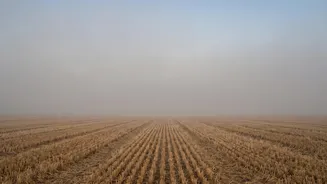
The factor that often tips the scale from 'poor' to 'severe' air quality is the start of stubble burning in the neighbouring states of Punjab and Haryana. Every year in October and November, farmers burn leftover crop residue to prepare their fields for the next sowing season. The prevailing post-monsoon north-westerly winds carry this thick smoke directly towards Delhi-NCR. This seasonal onslaught can contribute significantly to Delhi's pollution load, sometimes accounting for up to 45% of the particulate matter on the worst days. The smoke arrives just as local meteorological conditions become perfect for trapping it, creating a devastating combination.
A Perfect Storm for Pollution
The rapid deterioration of air quality is not due to a single cause but the simultaneous alignment of all these factors. It’s a perfect storm. The monsoon's retreat removes the rain and strong winds that clean the air. Local pollution from traffic and industry, which is a year-round problem, begins to accumulate instead of dispersing. Cooler temperatures lead to temperature inversions that trap this pollution at ground level. Finally, the arrival of smoke from stubble burning adds a massive external load of pollutants into this already stagnant atmospheric soup. This multi-pronged assault is why the air quality can plunge so dramatically in just a matter of days.