




A Spike, Not a Permanent State
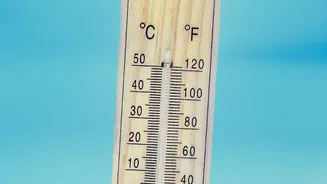
First, it’s crucial to understand what a ‘2°C month’ is and what it isn’t. This potential event refers to the global average temperature for a single month being two degrees Celsius warmer than the pre-industrial average. It is not the same as breaching
the Paris Agreement’s long-term goal, which aims to keep the sustained, multi-decade average temperature rise “well below 2°C”. A temporary spike is like a fever that breaks; a long-term breach is like a chronic condition. Scientists have expected these temporary exceedances to become more frequent as the planet continues to warm. Think of it as a flashing red light on the dashboard of our planet. It’s a sign that the engine is overheating and a warning of what could become permanent if we don’t act.
Why Is This Happening Now?
This alarming new forecast is the result of a powerful combination of factors. The primary driver is the steady accumulation of greenhouse gases in the atmosphere from human activity, which has created a consistent warming trend. Layered on top of that is a strong El Niño weather pattern, a natural phenomenon that temporarily pushes global temperatures even higher. Researchers at the University of Miami’s Rosenstiel School note that the likelihood of hitting a 2°C month has jumped significantly as forecasts for the current El Niño have grown stronger. This combination gives us a preview of a future where such extreme heat is not just a temporary anomaly but a more regular occurrence.
What It Would Feel Like in India
For India, a 2°C global anomaly isn’t an abstract number; it translates into tangible and severe consequences. With over 80% of its land and 90% of its population already exposed to climate hazards, India is on the front lines. A key concern is the urban heat island effect, where cities are significantly hotter than surrounding rural areas. Studies show that Indian cities may warm much faster than global models predict, meaning a 2°C global spike could feel like a 3°C or even 4°C rise in some urban centres, leading to deadly heatwaves and acute water shortages. Agriculture, which supports a majority of households, is also highly vulnerable. A sustained 2°C rise could slash agricultural productivity by 15-20%, threatening food security and rural incomes in a nation where farmers already battle erratic monsoons and drought.
From Panic to Proactive Preparation
The forecast for a potential 2°C month is not a prophecy of doom but a powerful call to action. It underscores the urgency of shifting our focus from debating ‘if’ such events will happen to ‘how’ we prepare for them. The economic case for preparation is clear. Estimates suggest that at 2°C of warming, India could face annual adaptation costs of over $200 billion to protect its people and economy. Investing now in resilience is far cheaper than scrambling to respond to disasters. This means accelerating both mitigation—cutting emissions to slow long-term warming—and adaptation, which involves adjusting to the climate changes already underway. The conversation is no longer just about avoiding a warmer future, but about surviving and thriving in the one that is arriving faster than we thought.
Building a Resilient Nation
Fortunately, India is not starting from scratch. The country has frameworks like the National Action Plan on Climate Change (NAPCC) and corresponding state-level plans (SAPCC). The key now is to enhance and integrate these plans with on-the-ground risk assessments. Practical preparation is already happening in pockets across the country. Initiatives supported by the World Bank and other partners include rehabilitating thousands of dams to manage unpredictable water flows, restoring coastal mangrove forests that act as natural barriers against storms, and promoting climate-resilient agricultural practices to safeguard crop yields. Other critical steps include designing heat-resilient cities with more green spaces and better water management, and strengthening early warning systems to protect vulnerable communities from extreme weather events. These efforts need to be scaled up rapidly, moving from isolated projects to a nationwide strategy.