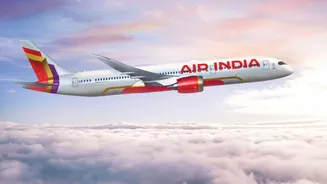








A Landmark Partnership
In a significant move, Air India and India's Ministry of Tourism have signed a Memorandum of Understanding (MoU) to jointly promote India as a premier global destination. Announced on July 27, 2026, this agreement formalises the airline's role in the government's
'Incredible India' campaign. The partnership establishes a framework for a wide range of coordinated initiatives, including co-branded marketing, destination storytelling, and enhancing the visitor experience from the moment they book a flight. The goal is to leverage Air India's expanding global network, which already serves 40 international destinations across five continents, to boost inbound tourism and establish India as a key aviation and transit hub.
More Than Just a Seat on a Plane
The collaboration will see the 'Incredible India' brand integrated across Air India's various touchpoints. This includes joint global marketing campaigns across digital and social media, as well as inflight branding. The plan is for Air India’s world-class aircraft, digital platforms, and inflight experiences to become powerful channels for telling the India story to travellers around the world. Nipun Aggarwal, Air India's Chief Commercial Officer, stated that as the airline carries the nation's name, it has a unique responsibility to act as an ambassador for a "'new India' that is confident, vibrant, warm, and welcoming." This means that from the cabin crew's service to the content on the seatback screen, the airline will be curated to offer a glimpse of Indian hospitality and culture.
The Transit Hub Ambition
A key and particularly interesting component of the strategy is the focus on transit tourism. For years, international travellers flying between the East and West have transited through hubs in the Middle East like Dubai and Doha. This partnership explicitly aims to position Indian cities, particularly Delhi and Mumbai, as competitive transit gateways. The MoU includes provisions for developing stopover programmes, designed to encourage passengers with connecting flights to extend their layover and explore India for a short period. This could convert millions of passengers who are merely passing through into short-stay tourists, a model successfully used by Gulf carriers for decades. The agreement also suggests a "Visit India Pass" might be explored as part of these efforts.
A Carrier Reborn
This strategic alignment comes as Air India undergoes a massive transformation under the ownership of the Tata Group, which took control in January 2022. The group is on a mission to revive the airline, with a commitment to making it a carrier that connects India to the world with pride. This involves a complete overhaul of its fleet, service standards, and brand image. Tata Sons Chairman N. Chandrasekaran has described the rebuilding of Air India as a five-to-ten-year journey. The airline's passenger share on key long-haul routes has already grown significantly, and it aims to triple its fleet over the next decade. This revitalisation is crucial, as the government is placing its trust in a modern, reliable, and globally respected airline to be the face of Indian tourism.
Challenges and The Road Ahead
While the vision is ambitious, the path is not without its challenges. The transformation of a legacy airline is a monumental task, with hurdles ranging from supply chain disruptions to overhauling deep-rooted systems and culture. Furthermore, making India a desirable transit hub requires not just a great airline but also world-class airport infrastructure and seamless passenger processing. The partnership itself is non-commercial and non-binding, meaning its success will depend on the sustained commitment and collaboration of both parties. A Joint Working Group will be formed to oversee progress. However, by formally linking the national carrier's brand with the national tourism strategy, India has created a powerful symbiotic relationship. The success of one is now intrinsically tied to the success of the other.