


The Challenge of an Alien Landscape
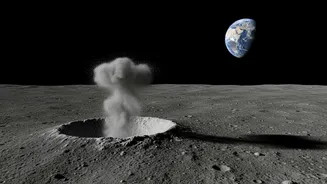
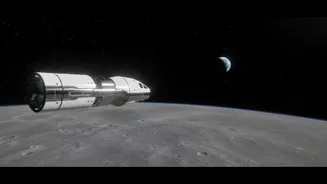
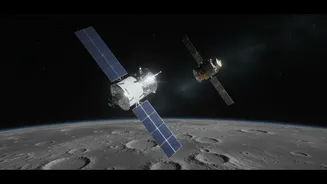
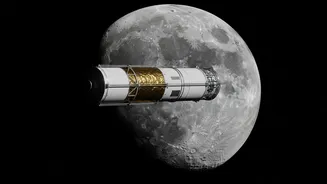
Planning a mission to the Moon is an exercise in navigating the unknown. As part of its Artemis program, NASA aims to establish a sustainable human presence on the lunar surface, beginning with a base near the Moon's South Pole. This region is a prime
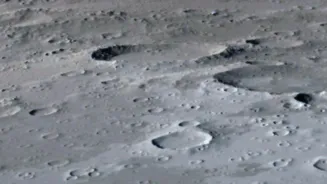
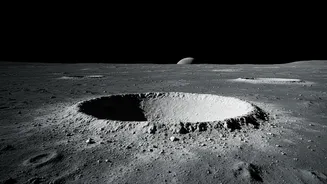
target because it's believed to hold vast quantities of water ice in permanently shadowed craters. This ice could provide drinking water, breathable oxygen, and even hydrogen for rocket fuel, dramatically reducing the supplies missions need to carry from Earth. However, the exact nature of the terrain is a massive question mark. Is the ground firm or soft? Is it covered in sharp, glass-like volcanic rock that could shred rover wheels, or fine, abrasive dust that could cripple sensitive equipment? Answering these questions before astronauts arrive is critical to ensuring their safety and the success of the mission.
Finding the Moon on the Ocean Floor
To solve this problem, NASA employs 'analog missions'—field tests in locations on Earth that have physical similarities to extreme space environments. For decades, this has included volcanic deserts in Arizona and the icy plains of Antarctica. Now, scientists are turning to a fascinating new analog: submarine volcanoes. On Earth, volcanoes that erupt deep underwater behave in ways surprisingly similar to how volcanoes once erupted on the ancient Moon. Billions of years ago, the Moon had almost no atmosphere. The immense pressure of the deep ocean mimics the vacuum of space, influencing how lava flows, cools, and fractures. By studying these formations on our own planet, scientists can build much better models of what to expect on the Moon.
The SUBSEA Program: Diving for Data
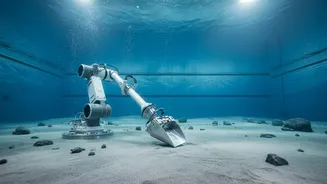
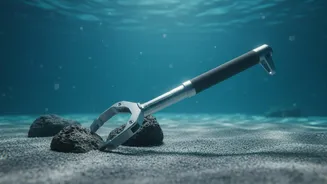
A key initiative in this effort is the SUBSEA program, a partnership between NASA and other scientific bodies to study underwater environments as analogs for space. One primary focus has been the Lōʻihi seamount, an active submarine volcano off the coast of Hawaii. Using remotely operated vehicles (ROVs), research teams map the seafloor, collect rock and water samples, and analyse the unique geology created by eruptions under intense pressure. This data helps scientists understand the textures, stability, and composition of volcanic terrains that Artemis astronauts are likely to encounter in lunar regions shaped by ancient volcanic activity. The insights gained are invaluable for designing robust rovers, selecting safe landing zones, and developing effective tools for geological exploration.
How It Improves Mission Timelines
The connection between deep-sea research and mission timelines is all about reducing uncertainty. Every unknown variable in a space mission adds risk, which in turn adds time for planning, testing, and developing contingency measures. By creating more accurate maps and terrain models based on real-world data from submarine volcanoes, NASA can plan mission traverses with greater confidence. This directly impacts timelines by allowing for more efficient scheduling of extravehicular activities (EVAs), or 'moonwalks'. Planners can better estimate how long it will take a rover to travel from a landing site to a point of scientific interest, avoiding geological hazards that could cause delays or damage equipment. This de-risking process streamlines the entire operational plan, helping to keep the complex, multi-year Artemis schedule on track and on budget.
More Than a Map: Preparing for Discovery
This underwater research does more than just help with logistics. Training in these analog environments also prepares astronauts and mission scientists for the work of exploration itself. In a recent exercise, NASA geologists practiced using scientific tools in prototype spacesuits within the agency's Neutral Buoyancy Laboratory, a massive indoor pool that simulates lunar gravity. They worked on a simulated lunar landscape under lighting conditions designed to mimic the long, deep shadows of the Moon's South Pole, learning how to conduct scientific work efficiently and safely in a harsh, alien environment. By understanding how volcanic processes work in similar conditions, scientists are also better equipped to identify geologically interesting features on the Moon, such as potential lava tubes that could serve as shelters for future habitats or locations where valuable resources might be concentrated.