







New Infrastructure for a New Ambition
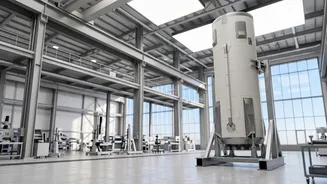
The big change at Agnikul is the inauguration of two new, highly specialized facilities at its Chennai campus. These aren't just more factory floor space; they are purpose-built to tackle the holy grail of modern rocketry: reusability. The first is the Stage
Testing & Inspection Facility (STIF), and the second is the Pressurant Tank Realisation, Over-wrapping and Outfitting Facility (PROOF). Both were developed entirely in-house and were inaugurated in the presence of Group Captain Shubhanshu Shukla, one of India's designated Gaganyaan astronauts. This move signals a significant expansion of Agnikul's in-house capabilities, specifically targeting the complex challenge of making rockets that can fly more than once.
What Has Actually Changed?
The key change is a strategic pivot from merely building rockets to building a sustainable, repeatable launch system. The STIF facility is designed to test complete rocket stages under flight-like conditions and, crucially, to inspect and requalify them after they are recovered. This is the “reusability” part of the equation—the ability to check a returned rocket stage and certify it for another mission. The PROOF facility allows Agnikul to manufacture its own high-pressure composite vessels, a critical component, reducing reliance on external suppliers and giving the company greater control over quality and timelines. Before this, Agnikul's focus was on demonstrating its 3D-printed engine and launch capabilities, which it successfully did with the Agnibaan SOrTeD sub-orbital flight in May 2024. Now, the focus is shifting to the full cycle: build, test, fly, recover, inspect, and fly again.
What Remains the Same?
While the infrastructure is new, Agnikul's core mission remains firmly in place. The company was founded in 2017 to address a gap in the market: providing flexible, on-demand launch services for the growing small satellite industry. That goal hasn't changed. The flagship Agnibaan launch vehicle, a highly configurable rocket, remains the centerpiece of their strategy. So does their pioneering use of 3D printing to create the world's first single-piece rocket engine, the Agnilet. These new facilities are not a replacement for their existing technology but an enhancement. They are designed to make the Agnibaan rocket system more cost-effective and competitive in the long run by enabling the recovery and reuse of its most expensive components. The ultimate aim of providing affordable and accessible space transport is the constant north star.
The Bigger Picture for Indian Space
Agnikul's investment in reusability is not happening in a vacuum. It places the Chennai-based startup among a select group of companies globally that are pursuing full-stack reusable launch capabilities. This move is a significant step for India's private space sector, which is rapidly evolving from a nascent industry into a serious global contender. With this new infrastructure, Agnikul becomes the only private Indian company with the in-house capability to requalify rocket stages after a flight, a critical and complex part of the reusability puzzle. This ambition aligns perfectly with the national goal of increasing India's share of the global space market and enabling ISRO to focus on more advanced R&D and deep space missions. By aiming to slash launch costs, reusability could democratize space access and unlock new business models, from in-orbit data centres to advanced manufacturing in space.