







Quantum Computing in Simple Terms
Before diving into what this means for Bengaluru, let's demystify the term 'quantum computing'. Think of a classical computer, the one on your desk or in your pocket. It works with 'bits', which are like tiny switches that can either be on (1) or off
(0). It's a powerful binary system, but it has its limits when faced with exceptionally complex problems. Quantum computers, on the other hand, use 'qubits'. Thanks to the principles of quantum mechanics, a qubit can be a 0, a 1, or both at the same time—a state called superposition. This seemingly small difference allows quantum machines to explore a vast number of possibilities simultaneously, making them extraordinarily powerful for specific tasks like designing new molecules for medicine, creating advanced materials, and solving complex optimisation problems that would take a classical computer millions of years to crack.
Bengaluru's Quantum Leap
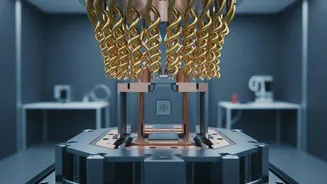
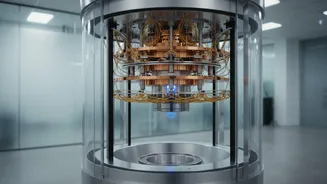
The abstract power of quantum computing is now becoming a tangible reality in India. Several key developments are putting Bengaluru at the epicentre of this revolution. One major milestone is the collaboration between Bengaluru-based company QpiAI and Alliance University to establish India's first commercially accessible 8-qubit superconducting quantum computing experience centre. This initiative, located at the university's campus, moves quantum technology out of exclusive research labs and puts it into the hands of students, researchers, and the broader industry. It provides a physical hub for over 200 global tech companies and thousands of startups in the region to gain hands-on experience. This follows earlier breakthroughs from companies like QpiAI, which launched its 'Indus' 25-qubit system in 2025 and is developing a 64-qubit processor named 'Kaveri'.
More Than One Way to Go Quantum
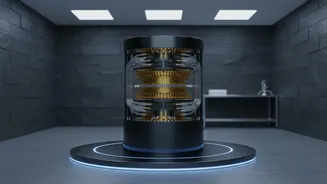
The innovation isn't limited to a single approach. While systems from companies like QpiAI use superconducting circuits that require extreme cooling, another Bengaluru startup, Quanfluence, has developed a commercial quantum computer that operates at room temperature. Founded by former Texas Instruments engineers, Quanfluence uses photonic technology—harnessing light for computation—which sidesteps the need for massive, energy-intensive cryogenic refrigerators. This diversity in hardware approaches is crucial for a healthy ecosystem, offering different pathways to building scalable and commercially viable quantum machines. It signals a maturing of India’s deep-tech sector, where homegrown companies are not just using but also building the next generation of hardware.
Why Commercial Access Matters
Until now, access to quantum computers for most Indian researchers and startups was limited to cloud platforms offered by global giants or through academic collaborations. The establishment of local, commercially available systems changes the game entirely. It drastically lowers the barrier to entry, allowing for direct experimentation and faster innovation cycles. For Bengaluru's thriving ecosystem of over 8,000 startups, this access could unlock new solutions in fields like drug discovery, financial modelling, logistics optimisation, and artificial intelligence. It provides the tools necessary to develop quantum algorithms and software tailored to solve uniquely Indian challenges, fostering a new generation of deep-tech entrepreneurs and building a skilled workforce ready for the quantum era.
The Road Ahead for India's Quantum Dream
These developments are powerfully supported by national initiatives like the National Quantum Mission, which aims to invest significantly in quantum technologies. The goal is to make India a global leader in the field, from hardware development to software and applications. While the current systems are still modest in qubit count compared to some global counterparts, they represent a critical first step. Building a full-stack quantum ecosystem—encompassing hardware, software, talent, and industry partnerships—is a marathon, not a sprint. The new systems in Bengaluru are foundational milestones in this long-term vision, providing the crucial infrastructure needed to turn theoretical promise into practical, world-changing applications and secure India's position at the forefront of technological innovation.