

Mehrangarh Fort, Jodhpur
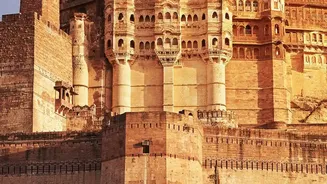
Rising from a 125-metre-high rocky hill, Mehrangarh seems to be an extension of the earth itself. Founded in 1459 by Rao Jodha, its forbidding, massive walls guard a complex of intricate and delicate palaces. The visual journey here is one of contrast.
As you pass through its seven gates, many still bearing the scars of cannonball impacts, you move from rugged martial exteriors to courtyards adorned with exquisitely carved sandstone filigree, known as jali work. Palaces like the Moti Mahal (Pearl Palace) and Phool Mahal (Flower Palace) showcase the opulent lifestyle of the Rathore rulers, creating a route that speaks of both formidable power and refined artistry.
Jaisalmer Fort, Jaisalmer
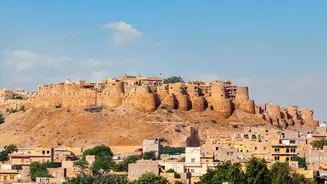
Unlike most forts, which are sterile monuments, Jaisalmer Fort is a living, breathing community. Nicknamed 'Sonar Quila' or the Golden Fort, its yellow sandstone walls blend into the surrounding Thar Desert, appearing like a mirage. Built in 1156, it is one of the world's few remaining 'living forts,' with a quarter of the old city's population still residing within its ancient walls. The visual route here is through its narrow, winding lanes, where homes, temples, shops, and guesthouses coexist. Walking these streets is to see history not as a relic, but as an uninterrupted, 860-year-old tradition. The fort is a UNESCO World Heritage site and offers a unique, immersive experience of a medieval city still in use.
Amer Fort, Jaipur
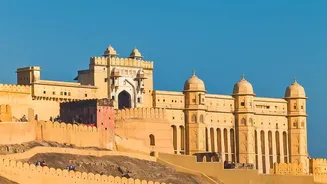
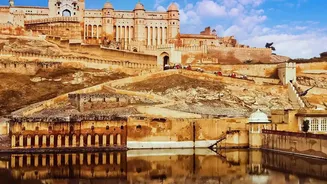
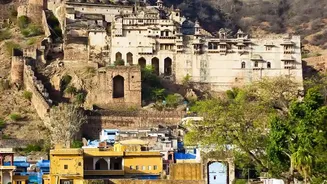
Sitting atop a hill overlooking Maota Lake, Amer Fort is a masterpiece of Rajput and Mughal architectural styles. Its visual appeal lies in its artistic grandeur. A walk through its sprawling complex is a journey through opulent halls, manicured gardens, and breathtaking chambers. The most famous route is to the Sheesh Mahal, or Mirror Palace. Here, the walls and ceilings are inlaid with thousands of tiny mirror pieces. Legend says it was built so the queen could watch the stars, as a single candle flame is enough to illuminate the entire room in a galaxy of reflections. This UNESCO World Heritage site, built from pale yellow and pink sandstone and white marble, is a testament to the romantic and artistic vision of its builders.
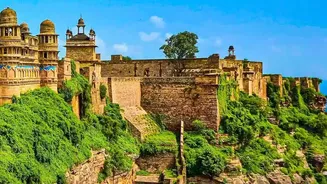
Gwalior Fort, Madhya Pradesh
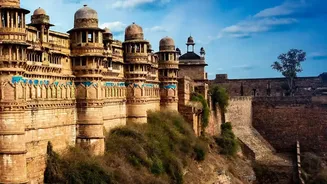
Hailed by the Mughal emperor Babur as 'the pearl among the fortresses of Hind,' Gwalior Fort has a history stretching back over a thousand years. Its visual route is a lesson in architectural diversity, showcasing Hindu, Muslim, and Jain influences. The fort’s ramparts enclose stunning structures like the Man Mandir Palace, famous for its vibrant blue ceramic tiles, and the unique Teli Ka Mandir, which blends North and South Indian architectural styles. Massive rock-cut statues of Jain Tirthankaras carved into the cliffs add another layer of awe. This sprawling complex is not just a fort but a timeline of North Indian history captured in stone.
Golconda Fort, Hyderabad
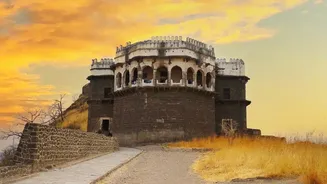
Once the capital of the Qutb Shahi dynasty and a famed diamond market, Golconda is a marvel of acoustic and military engineering. Originally a mud fort, it was expanded into a massive granite citadel. The visual journey here is one of ingenuity. The fort’s design incorporates a brilliant acoustic system; a clap at the main gate can be heard at the citadel's highest point, almost a kilometre away, which served as an alarm system. As you climb through its ruined palaces, mosques, and royal chambers, you are following a path designed for defence and communication, where the architecture itself tells the story of the kingdom's wealth, power, and ultimate decline.
Chittorgarh Fort, Rajasthan
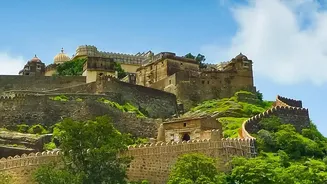
As the largest fort in India, Chittorgarh is less a fortress and more a fortified city. Sprawling across a 700-acre hilltop, this UNESCO World Heritage Site is a powerful symbol of Rajput valour and sacrifice. The visual route here is epic in scale, encompassing palaces, temples, reservoirs, and memorial towers. The fort witnessed several historic sieges and the legendary act of Jauhar, where royal women chose self-immolation over dishonour. Key landmarks like the Vijay Stambha (Tower of Victory) and Kirti Stambha (Tower of Fame) punctuate the skyline, standing as silent witnesses to a history filled with heroism and tragedy. Exploring its vast grounds feels like walking through the pages of an epic poem.
Kangra Fort, Himachal Pradesh
Believed to be the oldest fort in the Indian Himalayas, Kangra Fort offers a dramatic visual route set against the backdrop of the snow-capped Dhauladhar mountain range. Located at the confluence of two rivers, its strategic position made it a prize for centuries of rulers, from Hindu kings to the Mughals and Sikhs. The fort has endured numerous invasions and a devastating earthquake. Walking through its ancient gates and ruined temples, one feels the resilience of a structure that has stood for well over a thousand years. The breathtaking views of the surrounding valleys and mountains make a visit here a journey through both human history and the timeless grandeur of nature.