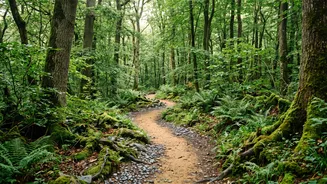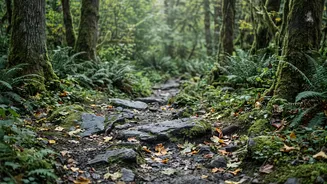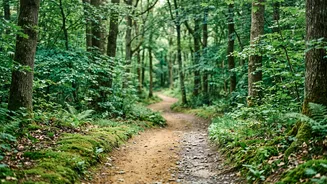







Hiking can easily become an exercise in just getting from start to finish. But what if the journey itself became the destination? It's time to shift your focus from the endpoint to the vibrant green spaces you move through.
The 'Why' Behind the Walk
Moving beyond the goal of just
accumulating kilometres allows you to tap into the profound benefits of nature. The Japanese practice of 'Shinrin-yoku', or forest bathing, is built on this very idea. It isn't about exercise, but about simply being in and connecting with the forest. Scientific studies show that immersing yourself in a natural environment can lead to significant health benefits. These include reducing stress hormones like cortisol, lowering blood pressure and heart rate, and boosting immune function. By slowing down and intentionally observing your surroundings, you are not just hiking; you are engaging in a form of natural therapy that can improve your mood, enhance cognitive function, and even lead to better sleep.
Engage All Your Senses
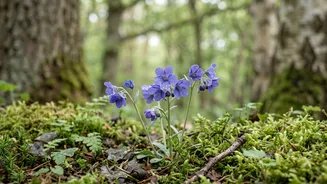
Mindfulness on a trail starts with a simple instruction: pay attention. Instead of letting your mind wander to your to-do list, actively engage your senses. Look closely at the details around you—the intricate pattern of a leaf, the many shades of green in a patch of moss, the way sunlight filters through the canopy. Listen for the specific sounds of the forest: not just 'birds', but the distinct calls and songs. Can you hear the wind rustling different types of leaves? Notice the scent of damp earth after a light rain or the fragrance of pine needles underfoot. You can even engage your sense of touch by feeling the rough bark of a tree or the cool surface of a stone. This sensory engagement grounds you in the present moment, making the experience richer and more restorative.
Master the Art of the Pause
A hiking routine often prioritises constant movement. The transformative step is to build in deliberate pauses. These are not just for catching your breath but for dedicated observation. When you stop, resist the urge to immediately check your phone or watch. Instead, stand still and simply watch the world around you. You might focus on a single plant and observe it for a few minutes. Watch insects at work or follow the path of a bird. These moments of stillness allow nature's subtler details to reveal themselves. You might also try an observational prompt used by naturalists: 'I Notice, I Wonder, It Reminds Me Of'. This simple framework encourages curiosity and helps you build a deeper connection with the environment you're in.
Become a Better Observer
Enhancing your enjoyment of green spaces can be supported by a few simple tools and a bit of knowledge. Learning to identify a few common trees, birds, or wildflowers on your local trails can transform your walk. What was once a generic green backdrop becomes a community of familiar species. Consider carrying a small pair of binoculars to get a closer look at distant birds or wildlife without disturbing them. Apps for identifying plants or bird calls can also add a new layer to your explorations. The goal isn't to become an expert overnight, but to slowly build your understanding. This knowledge deepens your appreciation and makes you more attuned to the life unfolding around you on every hike.
Making Mindful Hiking a Habit
Integrating these practices into your routine doesn't have to be complicated. Start small. On your next hike, set an intention to simply notice three things you've never seen before on that trail. Dedicate the first ten minutes of your walk to a 'sensory hike', where you consciously focus on what you can see, hear, and smell. Or, commit to taking one five_minute 'observation pause' at the midway point. The key is consistency. Over time, these small, intentional acts will become second nature. Your hikes will evolve from a purely physical activity into a holistic practice that nurtures both body and mind, turning every trail into a sanctuary for relaxation and discovery.