







The Regulator's Call for Caution
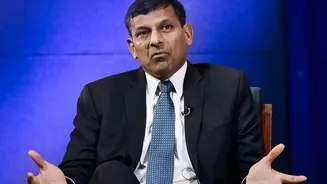
The Reserve Bank of India (RBI) is taking a firm stance on the adoption of Artificial Intelligence in the financial sector, emphasizing that innovation cannot come at the cost of stability and fairness. Speaking at the recent FIBAC 2026 conference, RBI Governor
Sanjay Malhotra urged banks to harness AI responsibly, not just as a risk to be managed. The central bank's primary concern is ensuring that as banks become more reliant on complex algorithms for critical decisions like lending, they do not create new forms of exclusion or instability. The RBI has made it clear that accountability remains with the bank, not the algorithm. "The 'model decided' can never be an acceptable answer to a customer, an auditor, or the Reserve Bank," Malhotra stated, highlighting the need for meaningful human oversight. To this end, the RBI has proposed draft guidelines requiring banks to establish robust governance frameworks, maintain an inventory of all AI models, and ensure decisions can be explained and, if necessary, overridden by a human. The regulator has flagged risks like algorithmic bias, where AI systems might develop preferences against certain regions or communities, and data privacy breaches.
SBI's Push for AI-Powered Growth
While the RBI lays down the rules of the road, the country's largest lender, State Bank of India (SBI), is already showcasing the immense potential of AI. The bank recently revealed that AI-driven analytical leads generated a staggering ₹22,000 crore of business in a single quarter. This represents nearly a quarter of its recent domestic loan growth, primarily across home, express credit, and MSME loans. SBI Chairman C.S. Setty believes the next frontier for AI is to move beyond urban retail customers and unlock credit for underserved segments. At the same conference, Setty called for using AI to expand credit access for rural India, small businesses, and farmers. He argued that to achieve India's goal of becoming a developed economy by 2047, banking must go deeper into the economy. SBI envisions using tools like satellite imagery and digital records to assess creditworthiness for those without conventional financial histories, improving access and reducing risk.
Caution and Ambition: Two Sides of One Coin
On the surface, the RBI's focus on risk and SBI's on growth might seem like conflicting priorities. However, a closer look reveals they are two essential parts of the same puzzle. The RBI Governor himself has acknowledged that the central bank sees AI as a capability to be harnessed, not just a risk to be contained, and that AI can be a powerful accelerator of financial inclusion. Similarly, the SBI Chairman has acknowledged that the push into AI must be accompanied by stronger cybersecurity, better governance, and human oversight. The RBI's proposed framework for "Responsible AI" is not meant to stifle innovation but to build a foundation of trust and stability upon which banks like SBI can sustainably build their AI-driven future. For SBI to successfully expand lending into rural and MSME sectors, it needs fair, transparent, and reliable AI models—precisely what the RBI is calling for. Without these guardrails, the risk of widespread errors, bias, or financial instability could derail the entire project.
What This Means for You, the Customer
This high-level dialogue between the regulator and a major bank has direct implications for every banking customer in India. On the one hand, SBI's AI-led vision promises a future of faster, more accessible financial services. It could mean quicker loan approvals, more personalized product offerings, and greater access to credit for entrepreneurs and individuals who were previously outside the formal banking system. AI-powered voice interfaces in local languages could also make banking simpler for many. On the other hand, the RBI's cautious approach is your safety net. The emphasis on transparency means you should have the right to know why an AI-driven decision was made about your finances. The focus on fairness aims to prevent you from being unfairly denied a loan due to a biased algorithm. And the requirement for human oversight ensures that when an automated system makes a mistake, there is a person you can turn to for intervention and correction.