






The High Cost of Delay
A recent report by the UN Environment Programme (UNEP) and the Climate and Clean Air Coalition (CCAC) puts a number on inaction. Titled 'Hidden Assets: The Economic and Health Case for Climate and Clean Air Action', the assessment finds that if Delhi
meets its national air quality standards on schedule from 2026, it could reduce its PM2.5 exposure burden by 20 percent by 2040. However, the report cautions that an eight-year delay—in line with the expected global average—would slash that improvement in half, to just 10 percent. This delay translates directly into greater health risks and economic costs for the city's residents.
PM2.5: The Invisible Threat
The report focuses heavily on PM2.5, fine particulate matter small enough to penetrate deep into the lungs and enter the bloodstream. This pollutant is a major driver of public health crises, linked to ischemic heart disease, stroke, lung cancer, and chronic obstructive pulmonary disease (COPD). The World Health Organization (WHO) considers annual average PM2.5 concentrations above 5 micrograms per cubic metre (µg/m³) to be unsafe. For context, studies have shown Delhi's levels to be persistently and significantly higher, with one analysis finding the city failed the WHO's daily safety criteria for PM2.5 an astonishing 99.5% of the time. Even a marginal increase in short-term PM2.5 exposure is linked to a rise in daily mortality.
A Year-Round Crisis, Not Just a Winter Woe
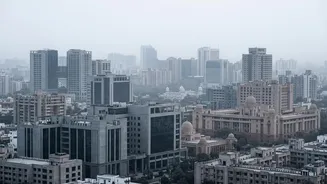
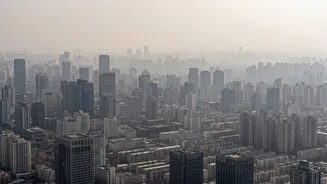
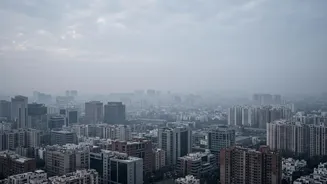
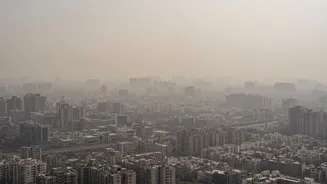
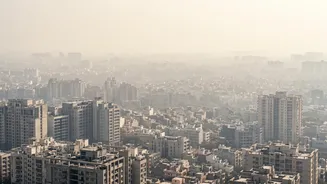
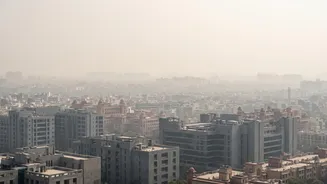
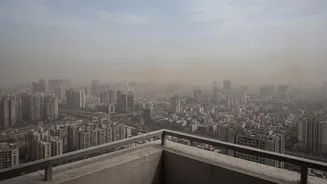
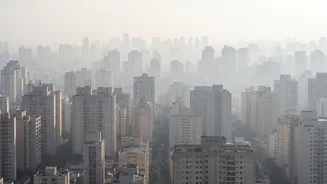
While public attention often peaks during the winter months when smog blankets the city, the UN's findings and other recent studies confirm that Delhi's air pollution is a year-round health emergency. Cold, still winter air traps pollutants close to the ground, causing the dramatic spikes in the Air Quality Index (AQI) that often make headlines. However, the baseline pollution from multiple sources—including vehicular emissions, industrial activity, construction dust, and waste burning—remains dangerously high throughout the year. This sustained exposure poses a continuous threat, even on days that seem clearer. A recent analysis showed that while levels of some pollutants like nitrogen dioxide have slightly decreased, PM2.5 concentrations remain stubbornly elevated regardless of the season.
The 25 Solutions on the Table
The UNEP report is not just a warning; it is also a roadmap. It identifies 25 feasible measures that can simultaneously tackle air pollution and climate change. These solutions include a rapid transition to renewable power, improving energy efficiency, wider adoption of clean cooking and heating technologies, and enforcing stricter vehicle emission standards. The report frames investment in these areas as a powerful economic tool, estimating that every dollar spent could yield around fifteen dollars in returns globally through health benefits and economic growth. For South Asia, the report identifies clean cooking and heating as a top priority, citing India's Pradhan Mantri Ujjwala Yojana (PMUY) as a step in the right direction.
What Stands in the Way?
Despite a clear path forward, the report identifies significant hurdles. Globally, institutional barriers are the single biggest contributor to delays in implementing clean air policies, accounting for an estimated 2.4 years of an average 8-year delay. In Delhi, this translates to a complex web of challenges requiring coordinated action across multiple government departments and neighbouring states. Current efforts, outlined in plans like Delhi's Air Pollution Mitigation Action Plan 2026, focus on phasing out polluting vehicles, managing dust, expanding the electric bus fleet, and enforcing 'No PUC, No Fuel' rules. However, the success of these measures depends entirely on strict, consistent, and accountable implementation—the very factor the UN report highlights as a critical global weakness.