





The Billion-Dollar Catch
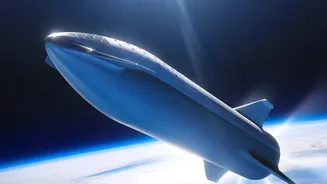
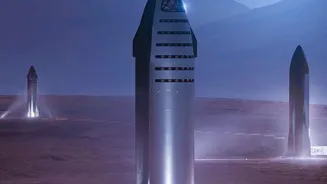
The entire premise of SpaceX’s Starship program hinges on making the world’s largest rocket fully and rapidly reusable. Unlike its workhorse Falcon 9, which lands its first stage on legs, Starship is designed for a more radical approach. The plan is to
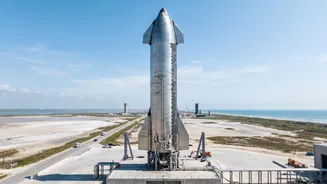
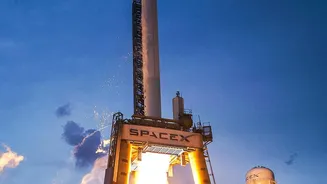
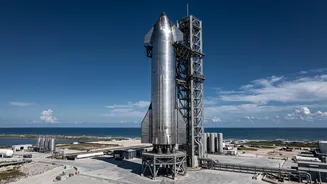
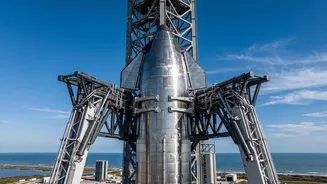
use the massive launch tower, nicknamed 'Mechazilla', and its two giant steel 'chopstick' arms to literally pluck both the Super Heavy booster and the Starship upper stage out of the air. This method eliminates the weight and complexity of landing legs, allowing for heavier payloads and, theoretically, a much faster turnaround for relaunch. Success would be a game-changer, slashing the cost of accessing space and paving the way for missions to the Moon and Mars. Flight 15, which launched on November 13, 2026, was the first time the company attempted to recover both stages on a single mission.
A Historic First, A Familiar Loss
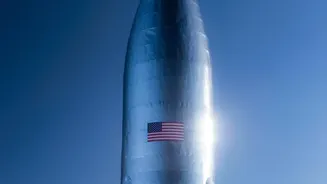
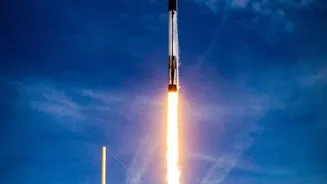
The mission was a tale of two vastly different outcomes. The star of the show was the Starship upper stage, Ship 42. After lifting off and deploying a batch of 26 Starlink satellites into orbit, it circled the Earth for nearly a full day. Then, on November 14, it executed a fiery reentry, survived the intense heat and friction of the atmosphere, and navigated itself with pinpoint precision back to the launch site in South Texas. In a stunning display of engineering prowess, the 50-meter-tall spacecraft fired its engines, flipped to a vertical orientation, and settled perfectly into the waiting arms of Mechazilla. It was the first time in history an orbital-class upper stage had been caught. But the triumph was tempered by the loss of the first stage. The Super Heavy booster, Booster 22, successfully completed its part of the ascent but faltered on its return. An automated safety system, triggered by a low-fuel alarm, aborted the catch attempt just minutes after launch. Instead of returning to the tower, the booster diverted to a designated splashdown zone in the Gulf of Mexico, where it was intentionally destroyed after performing a controlled landing burn over the water.
What Went Wrong with the Booster?
In the aftermath, SpaceX CEO Elon Musk confirmed that a slight underperformance from the Super Heavy's 33 Raptor engines during ascent was the culprit. The booster is designed to land with very little fuel margin to maximize performance; the slight inefficiency meant it didn't have enough propellant left to guarantee a safe return to the tower. The flight computers correctly identified the issue and initiated the abort sequence, prioritizing the safety of ground infrastructure over saving the booster. While the Guidance, Navigation, and Control (GNC) system performed its job perfectly by waving off the landing, the failure highlights the razor-thin margins involved in this maneuver. It also means the loss of 33 advanced Raptor 3 engines, a significant hardware cost.
A Successful Failure?
In the world of iterative development that SpaceX thrives in, Flight 15 will likely be viewed as a massive success, despite the lost booster. The primary goal, and by far the more difficult and novel one, was to prove an orbital-class spacecraft could be recovered from space with the tower. Achieving this 'holy grail' of rocketry on the first attempt is a monumental achievement. It provides a clear path forward for reusing the most expensive part of the launch system. Data from the successful catch of the Ship will be invaluable, allowing engineers to inspect the vehicle and understand how it fared during its 22-hour journey. While the loss of another booster is a setback, it is a known problem with a clear solution: improve engine performance and consistency, something SpaceX is already working on with newer Raptor engine versions. The mission successfully deployed its satellite payload and gathered crucial data, all while pushing the boundaries of what's possible.