

A New Class of Cosmic Explorer
NASA has officially selected the Probe far-Infrared Mission for Astrophysics, or PRIMA, as the first mission in its new 'Probe Explorers' program. This new class of mission, recommended by the National Academies' 2020 Decadal Survey, is designed to bridge
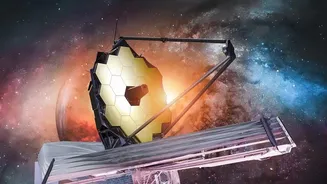
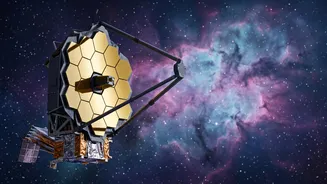
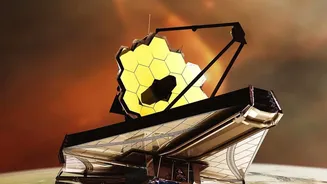
the gap between smaller, project-specific satellites and massive, multi-billion-dollar flagship observatories like the James Webb Space Telescope (JWST). With a projected cost cap of around $1.2 billion, Probe missions are intended to tackle high-priority scientific questions without dominating the agency's entire astrophysics budget. The selection moves PRIMA into its next phase of development, which involves finalizing the design and technology before a full confirmation review. If all goes to plan, the telescope is targeted for a launch no earlier than 2033 for a five-year mission.
The Universe's Hidden Light
So, what makes PRIMA special? It all comes down to the kind of light it will see. The universe communicates in a vast spectrum of light, from high-energy X-rays to low-energy radio waves. Telescopes are designed to see specific slices of this spectrum. While JWST is a master of the near- and mid-infrared, and ground-based arrays like ALMA excel in radio waves, there's a significant observational gap in between: the far-infrared. This wavelength is crucial because it can pass through dense clouds of cosmic dust that block shorter wavelengths of light. PRIMA is being built specifically to survey the sky in this far-infrared range, from 24 to 235 microns, giving astronomers a window into processes that are currently invisible. By doing so, it won't compete with Webb but will complement it, filling in a missing piece of the cosmic puzzle.
Answering Foundational Questions
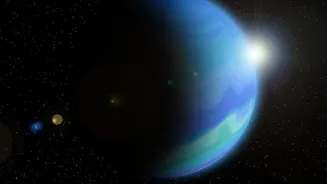
Peering into the far-infrared will allow PRIMA to address some of the most fundamental questions in astrophysics. Its three main scientific goals are to investigate the origins of exoplanets, trace the evolution of galaxies and their supermassive black holes, and understand how cosmic dust and heavy elements have accumulated over time. For instance, key molecules like water have spectral signatures that only appear in the far-infrared, meaning JWST cannot see them. PRIMA will be able to quantify the role water plays in forming new planets and determine the composition of the disks where they are born. Scientists are also excited for PRIMA to help explain how powerful molecular outflows from galaxies regulate star formation and the growth of the giant black holes at their centers.
Cool Technology for a Cool Universe
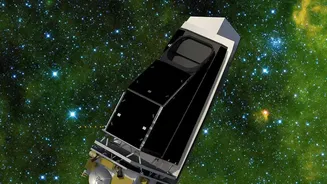
To achieve its goals, PRIMA will feature a 1.8-meter (5.9-foot) primary mirror. More importantly, the telescope and its sensitive instruments must be cryogenically cooled to just a few degrees above absolute zero. This extreme cold is necessary to suppress the telescope's own heat, which would otherwise emit bright far-infrared radiation and overwhelm the faint signals from distant galaxies. This cooling will make PRIMA orders of magnitude more sensitive than previous far-infrared missions like the Herschel Space Observatory and the Spitzer Space Telescope. Its two main instruments will be an imager called PRIMAger and a high-resolution spectrometer known as FIRESS (Far Infrared Enhanced Survey Spectrometer). This advanced technology will allow it to create sharp, detailed maps of the cold, dusty universe.
The Road to 2033
The PRIMA mission will be managed by NASA's Jet Propulsion Laboratory (JPL) in California, with several other NASA centers and international partners, including the Max Planck Institute for Astronomy in Germany, contributing key components and expertise. As the first 'Probe Explorer,' PRIMA's development will be closely watched. The program represents a new, more sustainable approach to tackling big-picture astronomy. It's a continuation of the legacy of the original Explorers Program, which began with Explorer 1 in 1958 and has since launched over 100 missions that have fundamentally shaped our understanding of space. For now, the mission enters a detailed design and development phase, with the ultimate goal of being ready for its journey to uncover a hidden side of the cosmos.