



A Mission of Mixed Fortunes
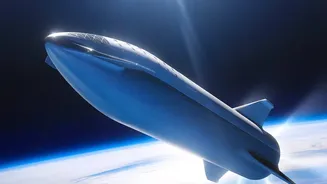
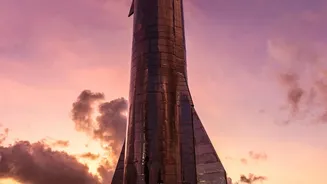
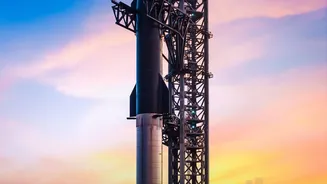
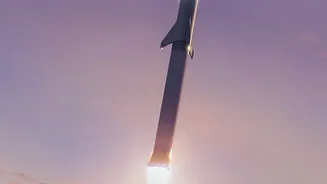
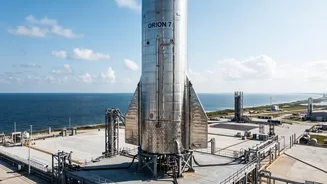
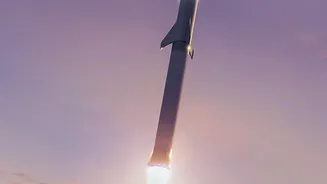
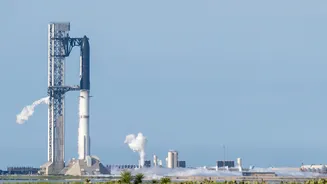
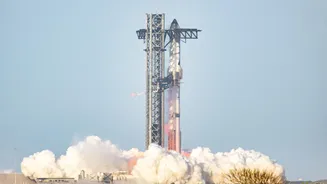
The latest integrated test flight of SpaceX’s Starship system was a story of two radically different outcomes. The colossal rocket, the most powerful ever built, lifted off from its Starbase facility in Texas with the primary goal of testing several key
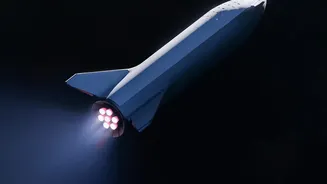
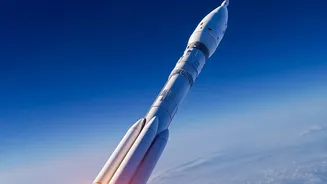
milestones. The early phases of the flight went according to plan, with the 33 Raptor engines on the Super Heavy booster thundering to life and successfully propelling the Starship upper stage towards space. Stage separation, a critical and complex maneuver, occurred flawlessly. But shortly after, the mission’s fortunes diverged dramatically. While the Starship continued its journey, the Super Heavy booster, intended to perform a series of burns to return for a landing, encountered a major anomaly.
The Booster's Abort and Loss
The plan for the Super Heavy booster was as ambitious as the rest of the mission: to fly back towards the launch site and perform a simulated landing, hovering just over the Gulf of Mexico. However, during its 'boostback' burn, multiple engines appeared to shut down prematurely. Onboard systems triggered an abort, and the booster deviated from its intended flight path. Instead of making a controlled descent, the massive booster was lost. For any other launch provider, the loss of the primary booster would have been a catastrophic failure. For SpaceX, however, it represents a crucial, if expensive, data-gathering exercise. Every failure in their iterative development process provides invaluable information to engineers on what to strengthen and redesign for the next flight.
A Monumental Catch
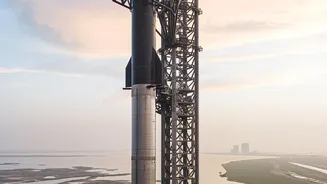
While the booster's flight ended prematurely, the Starship upper stage continued on its nominal trajectory. After reaching its target altitude, it performed a series of maneuvers to begin its descent back through Earth's atmosphere. This is where the mission's historic success unfolded. Instead of landing on its own legs or splashing down in the ocean, the Starship was guided with pinpoint precision back to the launch tower itself. In the final, breathtaking moments of its flight, the massive steel vehicle was caught by a pair of giant robotic arms on the launch tower, a system affectionately nicknamed 'Mechazilla'. This was the first time such a maneuver had ever been successfully attempted, proving a concept that many in the aerospace industry had deemed impossibly difficult.
Why This Changes Everything
Catching the Starship is not just a technical stunt; it's the linchpin of SpaceX’s entire plan for cost-effective space exploration. Successfully retrieving the vehicle with the launch tower eliminates the need for heavy and complex landing legs, freeing up mass that can be used for payload. More importantly, it is the key to rapid reusability. The vision is to catch the booster and the ship, place them back on the launch mount, refuel, and launch again in a matter of hours, not weeks or months. This 'launch, catch, repeat' system is what could drive down the cost of reaching orbit by orders of magnitude, making CEO Elon Musk's long-term ambitions of building a self-sustaining city on Mars economically feasible. This single successful catch is the most significant proof-of-concept for that vision to date.
The Path Forward
Despite the triumphant catch, the loss of the Super Heavy booster shows that significant challenges remain. SpaceX engineers will now pore over the telemetry from the failed landing attempt to diagnose and fix the issue. The company's 'hardware-rich' approach means that another booster is likely already being prepared for the next flight. The goal will be to have a mission where both the booster and the ship are successfully caught by the tower. This latest test, a perfect blend of failure and breakthrough, encapsulates the SpaceX philosophy: push the limits, learn from the explosions, and take giant leaps where others take small steps. The success of the ship recovery will undoubtedly energize the teams as they work to solve the remaining piece of the puzzle.