
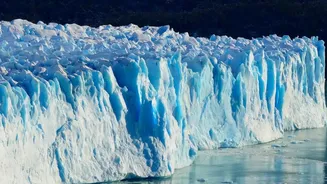
An Arctic Giant on the Move
The Petermann Glacier is not just a block of ice; it is a critical drainage system for the vast Greenland Ice Sheet. It channels about 4% of the island's ice into the ocean, moving at a speed of roughly one kilometre per year. At its end is a massive
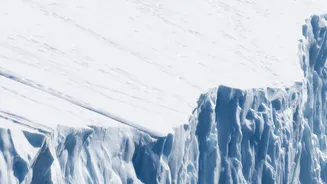
floating platform known as an ice tongue, which extends from the land and floats on the ocean. This tongue acts like a cork in a bottle, providing a crucial buttressing effect that slows the flow of the entire glacier behind it into the sea. If this support system weakens, the glacier can accelerate, dumping more land-based ice into the water and directly contributing to a rise in global sea levels.
A History of Dramatic Breaks
Petermann has a well-documented history of dramatic calving events, where enormous sections of the ice tongue break off. Major icebergs, some the size of large cities, broke away in 2008, 2010, and 2012. Following a period of relative stability, a significant event occurred on August 4, 2026, when a 76-square-kilometre piece—roughly the size of Manhattan—calved from the glacier. This was the glacier's largest single loss of ice in 14 years. These events are alarming because they shorten the ice tongue, reducing its ability to hold back the glacier. Scientists have been monitoring growing fractures since 2019, anticipating these breaks for years.
The Two Sections in Focus
The headline's "two sections" refer to the next major portions of the ice tongue that are at risk of breaking away. After the August 2026 calving, scientists immediately warned that two other large sections, already defined by long-developing rifts, are poised to detach. These anticipated ice islands are estimated to be even larger than the one that just broke off, covering approximately 94 and 84 square kilometres, respectively. If both of these sections calve, the Petermann ice tongue would lose a total of about 254 square kilometres, or 22% of its remaining area. Scientists are watching these specific, pre-fractured sections because their loss would represent a fundamental change in the glacier's stability.
The Invisible Threat From Below
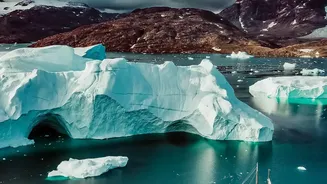
While dramatic surface cracks and calving events grab headlines, much of the danger to Petermann is invisible. Relatively warm Atlantic Ocean water is flowing into the fjord hundreds of metres below the surface and melting the ice tongue from underneath. This process, known as basal melting, is the primary driver of ice loss, accounting for about 75% of Petermann's recent mass reduction. This underwater melting carves deep channels into the base of the ice, weakening the structure and making it more susceptible to fracturing. It is this combination of a warming ocean below and a warming atmosphere above that creates a powerful one-two punch, accelerating the glacier's demise.
Why It Matters for India
The fate of a remote glacier in Greenland might seem distant, but its consequences are global. The ice stored in Petermann's drainage basin is enough to raise global sea levels by an estimated 38 centimetres if it all were to melt. For a country like India, with over 7,500 kilometres of coastline and densely populated coastal cities like Mumbai, Kolkata, and Chennai, even a few centimetres of sea-level rise can have devastating effects. It increases the risk of coastal flooding, erosion, and saltwater intrusion into freshwater sources. The massive influx of freshwater from melting glaciers can also potentially disrupt ocean circulation patterns that influence weather systems like the Indian monsoon. Therefore, monitoring Petermann is not just an academic exercise; it is a vital early warning system for the entire planet.