




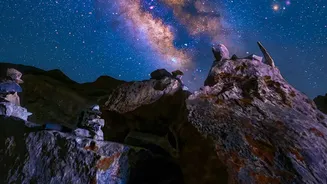
The Rise of Stargazing Travel
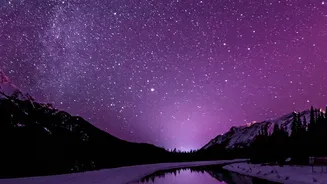
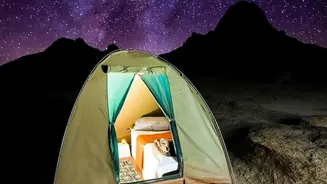
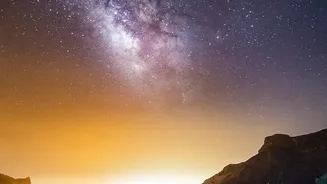
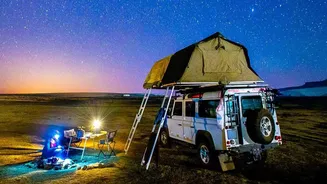
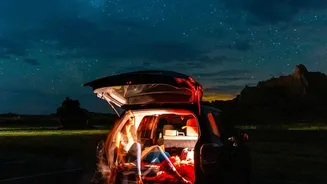
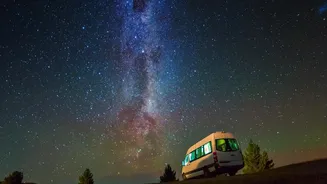
Astrotourism, or dark-sky tourism, is travel for the specific purpose of observing the night sky and its celestial wonders. It’s a rapidly growing niche that takes people away from the light-polluted skies of cities and into remote areas where the Milky
Way can still be seen with the naked eye. This form of travel blends science, nature, and cultural heritage, offering experiences that range from guided observatory visits to staying in homestays in areas with pristine night skies. The appeal is simple: in a world where more than 80% of the population lives under light-polluted skies, the chance to see the cosmos in its full glory has become a rare and valuable experience. Destinations in India like Ladakh, Spiti Valley, and parts of Rajasthan are becoming hotspots for this kind of travel.
An Encroaching, Artificial Glow
The very thing astrotourists are trying to escape is also the industry's biggest threat: light pollution. This refers to the excessive and misdirected use of artificial light at night. It creates a phenomenon called 'skyglow', a bright haze over urban and suburban areas that washes out all but the brightest stars and planets. For astronomy, the impact is devastating. It dramatically reduces the visibility of faint objects like galaxies and nebulae, hindering both amateur stargazing and professional scientific research. As towns and infrastructure expand, this artificial glow creeps further into rural areas, threatening the dark sky sites that are the foundation of astrotourism. Without dark skies, there is simply no product to offer.
More Than Just a Pretty Sky
The stakes are higher than just losing a beautiful view. Astrotourism is a powerful driver of sustainable economic development, especially for remote and rural communities. It creates local jobs for guides, diversifies income for homestay owners, and supports local businesses, often outside of traditional tourist seasons. India has already begun to tap into this potential. The Hanle Dark Sky Reserve in Ladakh, the country's first, was established not only to protect a prime site for astronomical research but also to boost the local economy through astro-tourism. In Hanle, local villagers, many of whom are women, have been trained as 'Astronomy Ambassadors' and equipped with telescopes to guide visitors, creating a new, sustainable livelihood rooted in preserving their unique environment. Similarly, Pench Tiger Reserve became India's first Dark Sky Park, blending wildlife conservation with stargazing. This shows that protecting the night sky is an economic asset, not a liability.
The Path to Darker Skies
The good news is that light pollution is reversible, and awareness is the first step. The creation of 'Dark Sky Places'—certified parks, reserves, and communities dedicated to preserving the night sky—is a crucial strategy. These initiatives work with local communities and governments to implement responsible lighting practices. This doesn't mean turning all the lights off; it means using light more intelligently. Solutions include shielding outdoor lights so they point downwards, using low-intensity, warm-coloured bulbs, and installing motion sensors so lights are only on when needed. The Hanle Dark Sky Reserve, a collaboration between scientific institutions and local administration, provides equipment like thick curtains and proper light bulbs to villagers to manage light spillage. These measures not only protect the sky for tourism and science but also save energy and reduce the harmful effects of artificial light on local wildlife.
A Tourist's Role in Preservation
As a traveller, you hold more power than you might think. Your choices and actions can directly support the preservation of dark skies. When visiting a dark sky area, be mindful of your own light usage. Keep your blinds and curtains closed at night to prevent light from escaping your room. When walking outside, use a red-light flashlight if possible, as it is less disruptive to night vision, and always point it downwards. Most importantly, support the businesses and destinations that are actively working to protect the night. Choose homestays and tour operators that follow dark sky-friendly practices. By demonstrating a demand for responsible astrotourism, travellers create a powerful economic incentive for communities to protect their starry-night heritage.