


The Soul of the Feast: Puran Poli
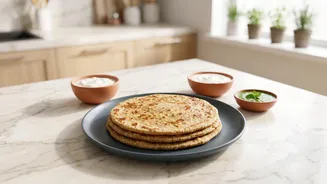
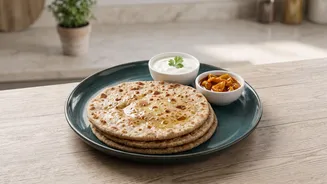
At the heart of any Maharashtrian festive meal is the Puran Poli. It’s a soft, delicate flatbread, a beautiful golden-brown parcel of joy. The 'poli' or the outer covering is typically made from whole wheat flour, sometimes with a bit of all-purpose flour for
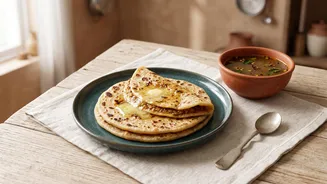
extra softness. But the real magic lies within the 'puran'—a sweet, fragrant filling that is both rich and comforting. This stuffing is meticulously prepared by cooking chana dal (split Bengal gram) until it's perfectly soft. The cooked dal is then mashed and sweetened with jaggery, which imparts a deep, caramel-like flavour. To elevate it further, the mixture is perfumed with aromatic spices like cardamom powder and a hint of nutmeg, creating a filling that melts in your mouth. Each Puran Poli is pan-roasted with a generous amount of ghee until it puffs up, turning into a delicious, sweet bread that is a celebrated dish during festivals like Holi, Ganesh Chaturthi, and Gudi Padwa.
The Spicy Counterpoint: Katachi Amti
Now, what makes this meal a true symphony of flavours is the Katachi Amti. It’s a thin, spicy, and tangy curry that is intrinsically linked to the Puran Poli. In Marathi, 'kat' refers to the leftover stock or water from cooking the chana dal for the puran, and 'amti' means a tangy, soup-like curry. So, Katachi Amti is brilliantly created from the nutritious water that is drained from the dal, ensuring nothing goes to waste. This flavourful stock is then transformed into a fiery broth. The amti gets its characteristic punch from a special blend of spices, often a regional 'goda masala' or 'kala masala'. It also features the sourness of tamarind, the heat of red chillies, and sometimes a touch of jaggery to balance the flavours, although some regional variations prefer a purely spicy taste to contrast the sweet poli.
A Harmony of Opposites
The pairing of Puran Poli with Katachi Amti is a classic example of balancing tastes, a core principle in Indian cuisine. The sweetness of the jaggery-filled Puran Poli is perfectly complemented and cut through by the spicy and tangy notes of the amti. It’s a culinary experience where opposites attract to create a harmonious whole. When you tear a piece of the warm, ghee-laden poli and dip it into the zesty amti, you get a burst of flavours—sweet, spicy, tangy, and savoury—all in one bite. This combination prevents the meal from becoming overwhelmingly sweet and creates a more complex and satisfying flavour profile. It’s not just a meal; it’s a well-thought-out culinary composition where each element enhances the other, making the experience of eating it truly memorable.
A Tradition of Zero-Waste Ingenuity
Beyond its incredible taste, the pairing of Puran Poli and Katachi Amti is a testament to the age-old wisdom of zero-waste cooking in Indian kitchens. The fact that a star side dish is created from a byproduct—the dal water—that might otherwise be discarded is a mark of culinary genius and resourcefulness. This practice highlights a deep-rooted philosophy of respecting ingredients and using every part of them. Long before sustainability became a global trend, traditional recipes like this one had it built into their very DNA. It showcases how frugality and creativity can lead to the most delicious outcomes, turning a simple cooking liquid into a celebrated curry that is considered an essential part of the festive platter.