







When you look up at the night sky, you're seeing a tiny fraction of our galactic home, the Milky Way. But our cosmic address is even more specific. Our sun, and our entire solar system, resides in a minor spiral arm called the Orion Spur.
Our Place in a Spiral City
Imagine the Milky
Way as a gigantic, spinning city of stars. Like many cities, it has a bright, dense core and sprawling suburbs. These suburbs are organized into huge, curving streets called spiral arms. For a long time, astronomers believed our galaxy had four major arms. More recent evidence suggests it has two main arms—Perseus and Scutum-Centaurus—and several smaller arms or 'spurs'. Our solar system is located in one of these minor arms, known as the Orion Spur or sometimes the Local Arm. We are situated about halfway between the galactic center and its outer edge, approximately 26,000 to 27,000 light-years from the core. This places us conveniently between the two major arms of Sagittarius and Perseus.
What Exactly is the Orion Spur?
The Orion Spur is a significant but not dominant feature of the Milky Way. It's a structure of stars, gas, and dust that is smaller than the main spiral arms it sits between. It measures about 3,500 light-years across and is estimated to be around 20,000 light-years in length. For years, it was considered just a small bridge or spur connecting the larger arms. However, some findings suggest it might be a more substantial structure, perhaps a branch of the Perseus Arm or even an independent segment. Regardless of its exact classification, it is our home, and it’s packed with celestial wonders.
Our Famous Galactic Neighbours
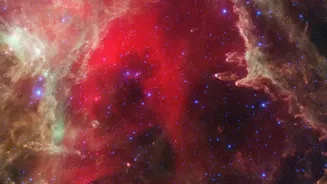
The reason the Orion Spur, or Arm, has its name is because of the constellation Orion. When we gaze at this prominent pattern in our winter sky, we are looking deeper into our own local spiral arm. This arm is home to some of the most famous and brightest objects in the night sky. This includes the red supergiant Betelgeuse, the brilliant blue Rigel, the three stars of Orion's Belt, and the spectacular Orion Nebula, a massive stellar nursery where new stars are being born. The Pleiades star cluster, also known as the Seven Sisters, is another famous neighbour within our local arm. So, many of the dazzling sights you can see with the naked eye or a small telescope are part of our immediate cosmic family.
A Good Place for Life?
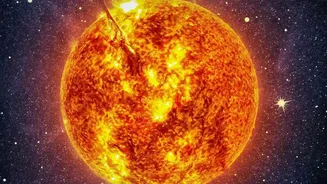
Our location in a minor arm might be one of the reasons life could flourish on Earth. The major spiral arms are dazzling but chaotic places. They are regions of intense star formation, which means more massive stars and more frequent supernovae—exploding stars that release immense amounts of deadly radiation. Being in the relatively quieter Orion Spur provides a more stable environment. Our sun is on a steady, predictable orbit around the galactic center, moving at about 720,000 kilometers per hour. Even at that incredible speed, it takes our solar system about 230 million years to complete one trip around the Milky Way. This long, stable journey through a less-crowded part of the galaxy may have provided the long-term calm necessary for complex life to evolve without constant disruption from cosmic catastrophes.