






What Exactly Is Shadow Boxing?
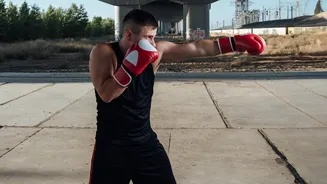
At its core, shadow boxing is the art of fighting an invisible opponent. It involves practicing all the movements of boxing—punches, footwork, head movement, and defensive slips—without a punching bag or partner. While it's a foundational training tool
for professional fighters to refine technique, it has gained widespread popularity as a standalone fitness routine. The beauty of shadow boxing lies in its accessibility; all you need is a bit of space to move. It combines elements of strength, endurance, and coordination into a single, fluid workout. By simulating a real match, you engage your entire body and mind, making it far more dynamic than many traditional forms of cardio.
The Ultimate Cardio Convenience
One of the most significant benefits of shadow boxing is its effectiveness as a cardiovascular workout. The continuous, explosive movements spike your heart rate, pushing your body into aerobic and even anaerobic zones. Unlike steady-state cardio like jogging, shadow boxing functions more like high-intensity interval training (HIIT). You perform bursts of intense combinations followed by brief moments of active recovery, which trains your heart to pump blood more efficiently. Research shows that a 30-minute session can burn between 300 to 500 calories, depending on your weight and intensity. This makes it an incredibly efficient way to improve heart health and manage weight without the repetitive impact of running on your joints.
More Than Just Arm Day
A common misconception is that shadow boxing only works the arms and shoulders. In reality, it is a true full-body workout. A proper punch originates from the ground up. When you throw a cross, for example, you pivot your rear foot, rotate your hips and core, and extend through the shoulder and arm. This chain of movement engages your legs, glutes, and core muscles just as much as your upper body. Constant footwork and defensive bobbing and weaving further activate the muscles in your calves and thighs. Over time, this consistent engagement can help increase muscle mass while decreasing body fat.
Sharpening Your Mind and Body
Shadow boxing is as much a mental exercise as it is a physical one. It requires intense focus, visualization, and coordination. You have to think about your next move, anticipate your imaginary opponent's actions, and link different punches and defensive moves into smooth combinations. This constant mind-muscle connection dramatically improves motor skills, balance, and body awareness. The concentration required can also serve as a form of active meditation, helping to relieve stress and improve mental clarity. By focusing entirely on your movements, you can block out external distractions and achieve a sense of flow.
Getting Started: Basic Form
Getting started is simple, but focusing on form is key. Stand with your feet shoulder-width apart, with your non-dominant foot forward (this is called an orthodox stance). Keep your knees slightly bent and your weight on the balls of your feet, allowing you to stay light and mobile. Bring your hands up to your face in a relaxed fist to protect your chin, with your elbows tucked in. Start with the four basic punches: the jab (a quick, straight punch with your lead hand), the cross (a powerful, straight punch with your rear hand), the hook (a semi-circular punch from the side), and the uppercut (an upward punch). Using a mirror can provide instant feedback on your technique. Focus on staying relaxed and fluid rather than tense.