




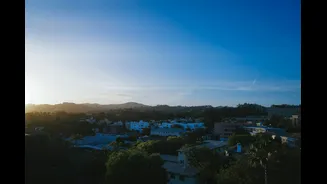
The Ethereal Landscape of the White Rann
The Great Rann of Kutch is one of the world's largest salt deserts, a surreal expanse that transforms into a vibrant cultural hub during the annual Rann Utsav. From November to March, what is otherwise a stark, barren landscape becomes accessible to travellers
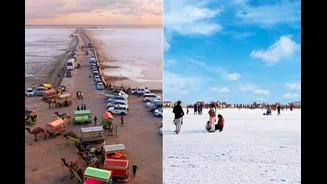
who flock to witness its otherworldly beauty. The festival is held near the village of Dhordo, where a sprawling Tent City provides accommodation and a gateway to the main attraction: the White Rann itself. This unique geography, a vast, flat plain with no trees or buildings to obstruct the view, creates the perfect stage for the sky's daily performance. It’s this uninterrupted horizon that makes the sunrise and sunset here a truly immersive and unforgettable experience.
The Sunrise: A Moment of Golden Tranquillity
To witness the sunrise over the White Rann is to experience a moment of profound peace. The experience begins in the pre-dawn chill, as you make your way to the viewing area in near darkness. As the first light appears, it doesn't just illuminate the landscape; it transforms it. The white salt crystals catch the soft, golden tones, creating a gentle glow that spreads across the desert floor. Photographers consider this the 'golden hour', a magical window when the light is soft and the colours are subtle yet stunning. Approximate sunrise times during the festival season range from around 6:45 AM in November to 7:30 AM in January. Arriving at the viewpoint at least 30-45 minutes early is recommended to find a quiet spot and watch the entire spectacle unfold before the crowds gather.
The Sunset: A Dramatic Farewell to the Day
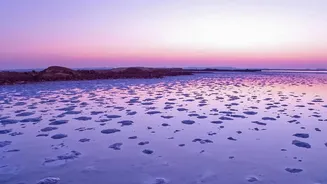
If the sunrise is a quiet meditation, the sunset is a dramatic celebration. As the day winds down, the atmosphere at the White Rann becomes more festive. Visitors gather, camel carts ferry people across the salt flats, and an air of anticipation builds. The setting sun paints the sky with a fiery palette of orange, pink, and purple, with the colours reflecting brilliantly off the white salt. This is an ideal time for capturing iconic silhouette shots, with camels and people starkly outlined against the vibrant sky. Unlike the quiet of the morning, the sunset is a shared, communal experience, offering a different but equally powerful connection to the landscape. Sunset typically occurs between 6:00 PM and 6:30 PM during the festival months.
Planning Your Visit: A Practical Guide
The Rann Utsav for the 2026-27 season is scheduled from November 1, 2026, to March 7, 2027. The most popular times to visit are during full moon nights, when the desert glows under the moonlight, and during holidays like Christmas and New Year's Eve. Booking accommodation and travel well in advance is crucial, especially for these peak dates. The gateway to any Rann is titled Bhuj city located about 80 km from Dhordo Tent City. You can reach Bhuj by flight from major cities like Mumbai and Delhi, or by train. From Bhuj, taxis, buses, or pre-booked transfers are available for many hours drive to Dhordo. Remember to pack layers; days can be pleasant, but desert nights get very cold. Also, carry cash, as any nearest ATMs are in Bhuj.
Beyond the Horizon
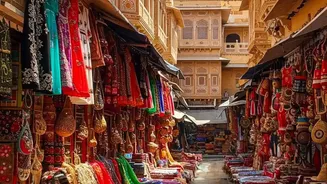
While its sunrises and sunsets are main events, its Rann Utsav offers rich cultural experience. Evenings at Tent City come alive with folk music and dance performances showcasing vibrant traditions of Kutch. You can explore local handicraft villages like Nirona and Bhujodi shop for exquisite textiles and art and indulge in authentic Kutchi cuisine. For panoramic view of entire Rann visit Kala Dungar (Black Hill) highest point in Kutch highly recommended and is another fantastic spot for sunset photography. These experiences add depth to your trip making it more than just visit to beautiful landscape.