



Anak Krakatau's Latest Fury
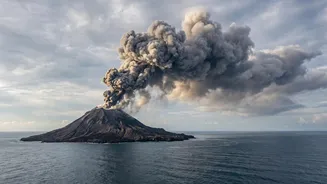
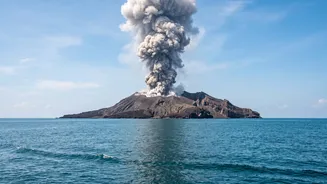
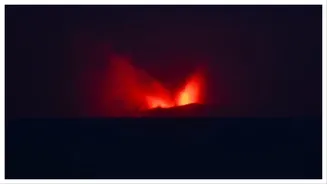
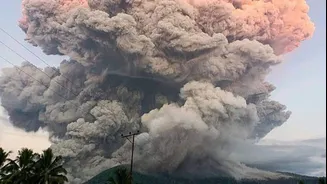
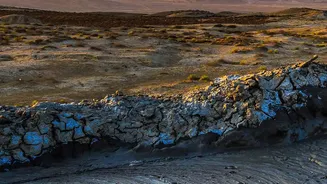
Since early September 2026, Anak Krakatau, or the "Child of Krakatau," has entered a new eruptive phase. The volcano, located in the Sunda Strait between Java and Sumatra, began spewing columns of volcanic ash high into the atmosphere, with some plumes
reaching altitudes of up to 15,000 metres. This activity prompted Indonesia's Centre for Volcanology and Geological Hazard Mitigation (PVMBG) to maintain a Level III alert status, the second highest level. While a 25-hour continuous eruption episode ended on September 6, authorities have noted that volcanic activity remains high, with the potential for future eruptions. A three-kilometre exclusion zone remains in effect around the crater.
Why Ash and Airplanes Don't Mix
Volcanic ash is not like the soft, fluffy soot from a fire. It is made of tiny, jagged particles of rock, minerals, and volcanic glass. For an aircraft, flying through an ash cloud is incredibly dangerous for several reasons. The abrasive particles can sandblast cockpit windows, severely impairing a pilot's visibility. They can also damage flight control systems and clog pitot tubes, which are vital for measuring airspeed. The most critical danger, however, is to the engines. The melting point of volcanic glass is lower than the operating temperature inside a modern jet engine. When ingested, the ash melts and then fuses onto cooler components like turbine blades and fuel nozzles, forming a ceramic-like coating. This can disrupt airflow, causing the engine to lose power or fail completely—an event known as a 'flame-out.'
Navigating a Sky Full of Ash
The response to this hazard has been swift and cautious. Aviation authorities rely on a global network of Volcanic Ash Advisory Centres (VAACs) to track the movement of ash clouds. The Darwin VAAC is responsible for monitoring Indonesian airspace and issuing advisories to the aviation industry. These advisories help air traffic controllers and airlines make critical decisions. Based on this data, Indonesian authorities temporarily closed at least eight airports over the weekend of September 6-7, including the nation's busiest hub, Soekarno-Hatta International Airport in Jakarta. This resulted in the cancellation or delay of over 1,500 flights, affecting hundreds of thousands of travellers. Airlines will not risk passenger safety, choosing to ground flights rather than fly through or near the forecasted ash plumes.
What Travellers Need to Know
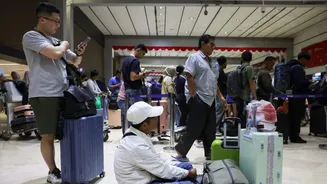
For passengers, the situation has caused significant disruption. Airport closures and flight cancellations have left many stranded. While some airports began to reopen as conditions improved, the situation remains fluid and dependent on the volcano's activity and wind direction. Airlines like Singapore Airlines have organized relief flights to help stranded customers. The key advice for anyone with travel plans in the region is to stay informed. Travellers should check directly with their airline for the latest flight status before heading to the airport. It is also wise to monitor updates from airport authorities and official news channels. While the delays are frustrating, they are a direct result of safety protocols designed to prevent a potentially catastrophic incident. The priority for all airlines and aviation authorities is ensuring that no aircraft is put at risk.