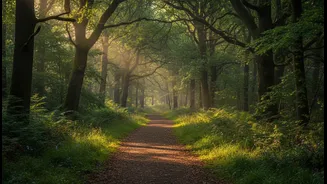









The Constant Drain on Our Attention
From the moment we wake up to the minute our head hits the pillow, our attention is under siege. Notifications buzz, emails pile up, and the endless scroll of social media demands our focus. This constant state of 'directed attention'—where we consciously
force our brains to concentrate on specific tasks—is mentally exhausting. Over time, this leads to what experts call directed attention fatigue, leaving us feeling irritable, unfocused, and mentally overloaded. In our hyper-connected urban lives, finding a moment of genuine mental peace can feel like an impossible task. We often try to power through with more caffeine or by simply accepting brain fog as a normal part of life. But research suggests a simpler, more accessible solution might be waiting right outside.
Nature’s Neurological Reset Button
This is where Attention Restoration Theory (ART) comes in. First proposed by researchers Rachel and Stephen Kaplan, ART suggests that nature can help us recover from mental fatigue. Unlike the demanding environment of a busy street or an open office, natural settings engage our minds in a different way. Nature captures our attention effortlessly, a state known as 'soft fascination'. Think of watching leaves rustle in the wind, the pattern of clouds in the sky, or the gentle movement of water. These elements are interesting enough to hold our attention without requiring intense focus, allowing our brain's depleted 'directed attention' resources to recharge. One study from the University of Michigan found that participants who took a walk through a natural arboretum showed a 20% improvement on memory and attention tests afterwards, while those who walked in a downtown urban area showed no improvement at all.
The Power Duo: Green and Exercise
The benefits multiply when you combine nature with physical activity—a practice often called 'green exercise'. Exercise on its own is a known mood and energy booster, increasing blood flow to the brain and releasing feel-good endorphins. However, studies comparing indoor and outdoor exercise consistently find that working out in a natural setting provides an extra mental edge. Research shows that exercising in natural environments is associated with greater feelings of revitalization, increased energy, and decreases in tension, confusion, and anger compared to the same exercise performed indoors. Even a short, 15-minute walk on a leafy path has been shown to improve concentration and working memory more than a walk inside a building. This suggests the combination of physical movement and natural scenery works synergistically to refresh both body and mind.
Finding Your Green Path in India
You don't need to trek into a deep forest to reap these rewards. The simple, tree-lined streets and local parks found across Indian cities are perfect natural gyms for your brain. Whether it’s a morning stroll through Lodhi Garden in Delhi, a weekend jog around Cubbon Park in Bengaluru, or simply walking down a quiet, leafy neighbourhood lane in Mumbai, these pockets of green are invaluable. The key is to be present and engage your senses. Listen to the birds, notice the different shades of green, and feel the breeze. The presence of trees in urban areas has been linked to lower stress, reduced anxiety, and a greater sense of community wellbeing. By consciously choosing a greener route for your daily walk or run, you are giving yourself a powerful, free, and accessible tool for better mental health.