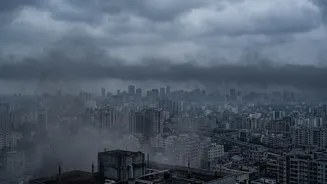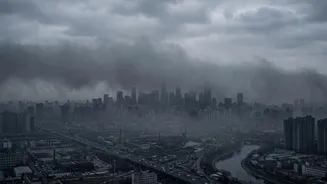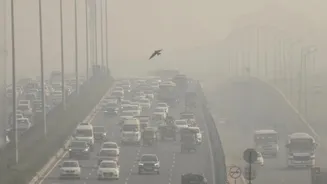







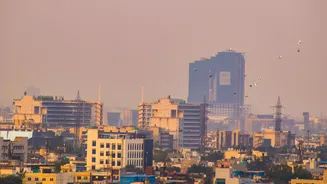
Each November, Delhi residents face a familiar confusion: the morning's air quality feels drastically different from the previous day's forecast. This gap between prediction and reality creates uncertainty right when clarity is needed most.
The Challenge of a Perfect Forecast
Predicting
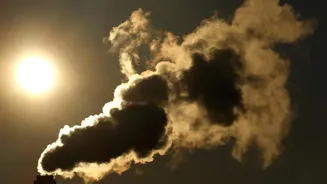
Delhi's air quality is a complex science, far more difficult than forecasting temperature or rain. While forecasting systems can predict 'very poor' air quality days with over 80% accuracy, they struggle with sudden spikes into the 'severe' category. The reason lies in a volatile mix of factors. Forecasting models, like those used by the Indian Institute of Tropical Meteorology (IITM), must account for local emissions from vehicles and industry, but also for external sources that are notoriously unpredictable. Outdated emissions data further complicates this, as models may not reflect the current reality of pollution sources on the ground. This means that while the general trend of bad air is known, the day-to-day severity can swing wildly based on variables that are in constant flux.
A Battle of Wind, Fire, and Fumes
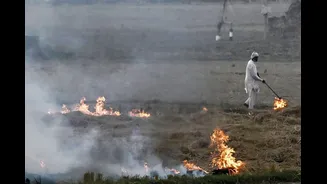
Three major elements make accurate daily predictions a moving target. First is stubble burning in neighbouring states. While satellites can track fires, forecasters can't perfectly predict how many fires will be lit or, crucially, if the wind will carry that smoke directly to Delhi. A slight shift in wind direction can be the difference between a 'very poor' and a 'severe' air day. Second are meteorological conditions. In winter, a phenomenon called temperature inversion acts like a lid, trapping pollutants close to the ground. The strength of this lid and the speed of surface winds determine whether pollution disperses or accumulates. With no rain or strong winds forecast, pollutants are expected to linger. Finally, unpredictable local events, like festival firecrackers or even traffic surges, can cause pollution spikes that models don't anticipate.
Decoding the Health Alerts
When authorities like the Commission for Air Quality Management (CAQM) issue an alert, they are responding to both current conditions and these very forecasts. The Graded Response Action Plan (GRAP) is a set of measures triggered by AQI levels. An AQI between 301-400 ('Very Poor') prompts GRAP Stage II or III, while an AQI over 401 ('Severe') can trigger Stage IV. These stages involve escalating restrictions, such as banning certain construction activities and placing limits on older vehicles. A 'health alert' is the public-facing advice tied to these stages. For the 'very poor' category, it means people with existing respiratory or heart conditions should avoid exertion. In the 'severe' category, the advice extends to the general public, urging everyone to avoid outdoor activities. These alerts are sometimes issued proactively based on forecasts that predict a worsening situation.
How to Plan Your Day Amid Uncertainty
Given the forecasting challenges, relying solely on predictions isn't enough. The most effective strategy is to monitor real_time AQI levels through reliable apps and websites before stepping out. Even if a 'very poor' day is forecast, conditions can deteriorate, making personal precautions essential. Health experts advise limiting outdoor exposure, especially for children, the elderly, and those with pre_existing conditions. When you must go out, a well_fitted N95 or N99 mask is critical, as cloth masks offer little protection against fine PM2.5 particles. At home, using a HEPA filter air purifier and keeping windows closed during high_pollution hours can create a safer indoor environment. Planning strenuous activities for the mid_afternoon, when pollution levels are often comparatively lower, can also help reduce exposure.