







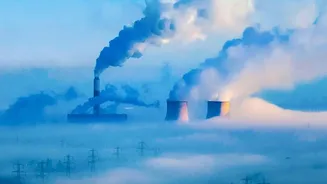
India's Growing Coal Pipeline
Recent data reveals a significant increase in India's proposed coal mining capacity. According to a Global Energy Monitor report, India was the main driver behind a global rise in new coal mine proposals in 2025, with planned capacity nearly doubling
in a single year. Much of this expansion is concentrated in the states of Jharkhand and Odisha. This aligns with the government's ambitious goal to increase domestic coal production to nearly 1.15 billion tonnes for the 2025-2026 fiscal year. This push is happening even as the actual commissioning of new mines globally has slowed, falling by 40% in 2025 from the previous year, which was already a decade low.
The Engine of an Expanding Economy
The primary reason for India's continued reliance on coal is its soaring energy demand. As one of the world's fastest-growing major economies, the country's appetite for electricity is immense. Projections show India’s electricity demand is expected to grow by around 7% in 2026 alone. This growth is fuelled by a combination of industrial and manufacturing expansion, rising household consumption, and the increasing need for cooling during more frequent and intense heatwaves. Peak power demand is expected to reach around 270-277 GW in 2026, putting immense pressure on the grid. For a government focused on economic development and providing stable power to its citizens, domestically produced coal is seen as a reliable and affordable baseload energy source.
Energy Security and Self-Reliance
Beyond pure demand, the strategy is deeply linked to national energy security. Coal currently fuels about 70% of India's electricity generation and meets nearly 55% of its total primary energy needs. Having abundant domestic reserves provides a crucial buffer against the volatility of international energy markets and geopolitical disruptions. This focus on self-reliance is a core tenet of the government's policy. By boosting domestic production, India aims to reduce its dependence on imported coal, which has already started to decline. This makes the power sector less vulnerable to global price shocks and supply chain issues, ensuring that the nation's economic engine has the fuel it needs to keep running.
The Parallel Push for Renewables
It would be a mistake, however, to see this as a simple rejection of clean energy. India is also a global leader in the renewable sector. As of July 2026, non-fossil fuel sources account for over half of the country's total installed power capacity, a milestone reached years ahead of schedule. India added a record amount of renewable capacity in 2025 and is the world's third-largest producer of renewable energy. The paradox is that even with this explosive growth, the variable nature of solar and wind power means they cannot yet provide the 24/7 power required to stabilize the grid. Coal plants provide this essential 'baseload' power, operating continuously to prevent blackouts, especially during evening peak hours when solar generation drops off.