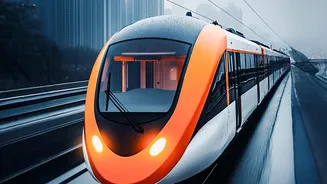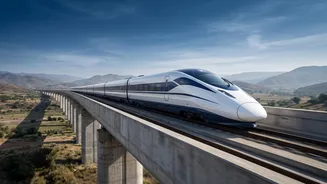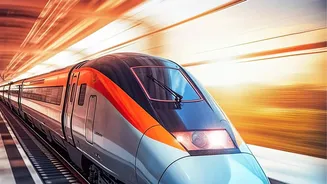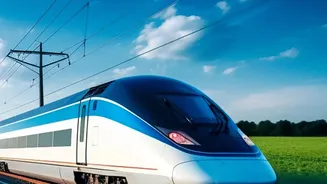





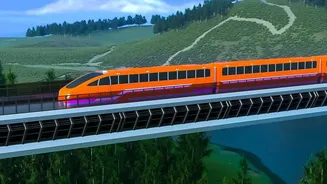


The Grand Vision: Two Corridors, One Network
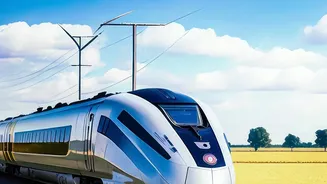
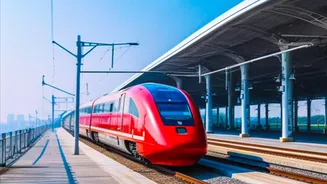
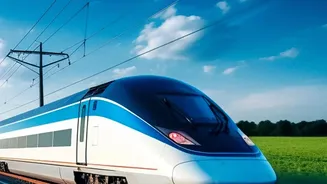
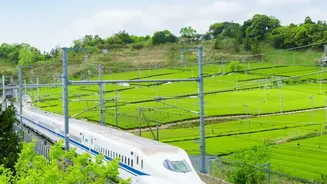
The 'North Bullet Train Corridor' isn't a single line but primarily comprises two major proposed high-speed rail projects managed by the National High Speed Rail Corporation Limited (NHSRCL). The first is the Delhi-Varanasi High-Speed Rail (DVHSR) corridor,
and the second is its eastward extension, the Varanasi-Howrah corridor. Together, these routes form a critical artery designed to connect the national capital with eastern India, running through some of the most densely populated regions. The trains are expected to operate at speeds of around 320 km/h, dramatically reducing travel times that currently take many hours or even overnight. While still in the proposal and planning stages, with Detailed Project Reports (DPRs) submitted or under preparation, the vision is to create an economic and transportation backbone for the entire Gangetic plain.
Uttar Pradesh: The Heart of the High-Speed Route
Uttar Pradesh stands to be a major beneficiary, with a significant number of stations proposed on the Delhi-Varanasi segment. The planned route will connect major economic, religious, and administrative centres. Proposed stations in UP include Noida, Jewar (serving the international airport), Agra, Lucknow, Ayodhya, and Prayagraj, among others. The route has been strategically planned to integrate key destinations. For instance, stops in Agra and Mathura cater to tourism, while a station at the upcoming Noida International Airport in Jewar aims to create a multimodal transport hub. The project also includes a crucial spur line connecting Lucknow to Ayodhya, recognizing the latter's growing importance as a major pilgrimage site. This extensive network within a single state highlights its role as the central pillar of the northern corridor.
Bihar's High-Speed Connection
The high-speed line extends into Bihar as part of the Varanasi-Howrah corridor. The first stations in Bihar after crossing from Uttar Pradesh are proposed at Buxar and Arrah, followed by the state capital, Patna. From Patna, the line is planned to proceed towards Gaya before moving into Jharkhand. The inclusion of these cities is significant for Bihar, a state that stands to gain immensely from improved connectivity. A station in Patna would link the state's largest urban centre to the national high-speed network, potentially enabling travel to Varanasi in about an hour and to Delhi in under five hours. This could provide a major boost to local economies, facilitate faster business travel, and better integrate the state into the national economic mainstream.
Beyond Stations: The Economic Impact
The project is about more than just speed; it's envisioned as a catalyst for regional development. The construction phase itself is expected to generate significant employment. Post-completion, the corridors are expected to spur economic growth around the new stations through a model known as 'transit-oriented development'. This typically involves the growth of commercial and residential real estate, new business opportunities, and an overall boost in economic activity. For agricultural and industrial belts in UP and Bihar, the high-speed link offers the potential for faster movement of goods and people, improving market access and fostering greater investment in the regions. Furthermore, connecting major religious and tourist centres like Varanasi, Ayodhya, Prayagraj, and Gaya with high-speed rail is expected to give a massive boost to tourism.
The Road Ahead: Timelines and Challenges
It is crucial to remember that these corridors are still in the proposed and planning stages. The National High Speed Rail Corporation Limited (NHSRCL) has been conducting various surveys, including LiDAR surveys for alignment, social impact assessments, and environmental studies. Detailed Project Reports (DPRs) have been submitted to the Ministry of Railways for review. The next steps involve securing final approvals from the Union Cabinet, followed by the complex and often lengthy process of land acquisition. While officials have shared indicative travel times, a final construction timeline has not been announced. Projects of this magnitude are capital-intensive and face numerous logistical hurdles, meaning the dream of bullet train travel in UP and Bihar is a long-term vision rather than an immediate reality.