





An Unexpected Arrival
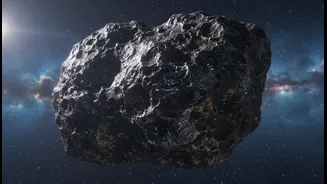
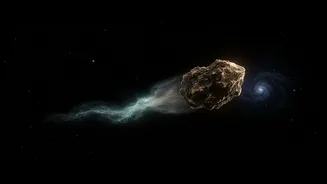
On July 16, 2024, a bright fireball streaked across the daytime sky over the US East Coast, accompanied by a sonic boom that shook New York City and New Jersey. While initial reports suggested the space rock, estimated to be about the size of a suitcase,
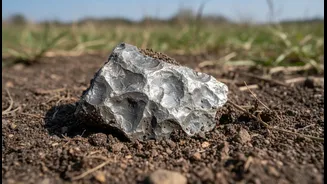
had likely vaporised in the atmosphere, one homeowner in Hillsborough, New Jersey, discovered otherwise. They found a hole in their bedroom ceiling and several black, sulfur-smelling rock fragments scattered across the room. Understanding the scientific importance, the homeowner quickly and carefully collected the pieces, preserving them from earthly contamination and allowing for an unprecedented analysis of a freshly fallen meteorite.
Cosmic Detective Work
Tracing a small rock across millions of kilometres of space is a monumental task. Scientists became cosmic detectives, using a wealth of data to reconstruct the meteorite's journey. Footage of the fireball from cameras across several states, including doorbell cameras, allowed astronomers to calculate the object's trajectory through our atmosphere. This data, combined with Doppler weather radar from Newark Airport which detected a cloud of falling pebbles, pinpointed the likely landing area. By analysing the rock's orbit, speed, and direction, scientists could rewind its path, tracing it from a New Jersey rooftop all the way back to its origin point: the main asteroid belt located between the orbits of Mars and Jupiter.
A Home in the Asteroid Belt
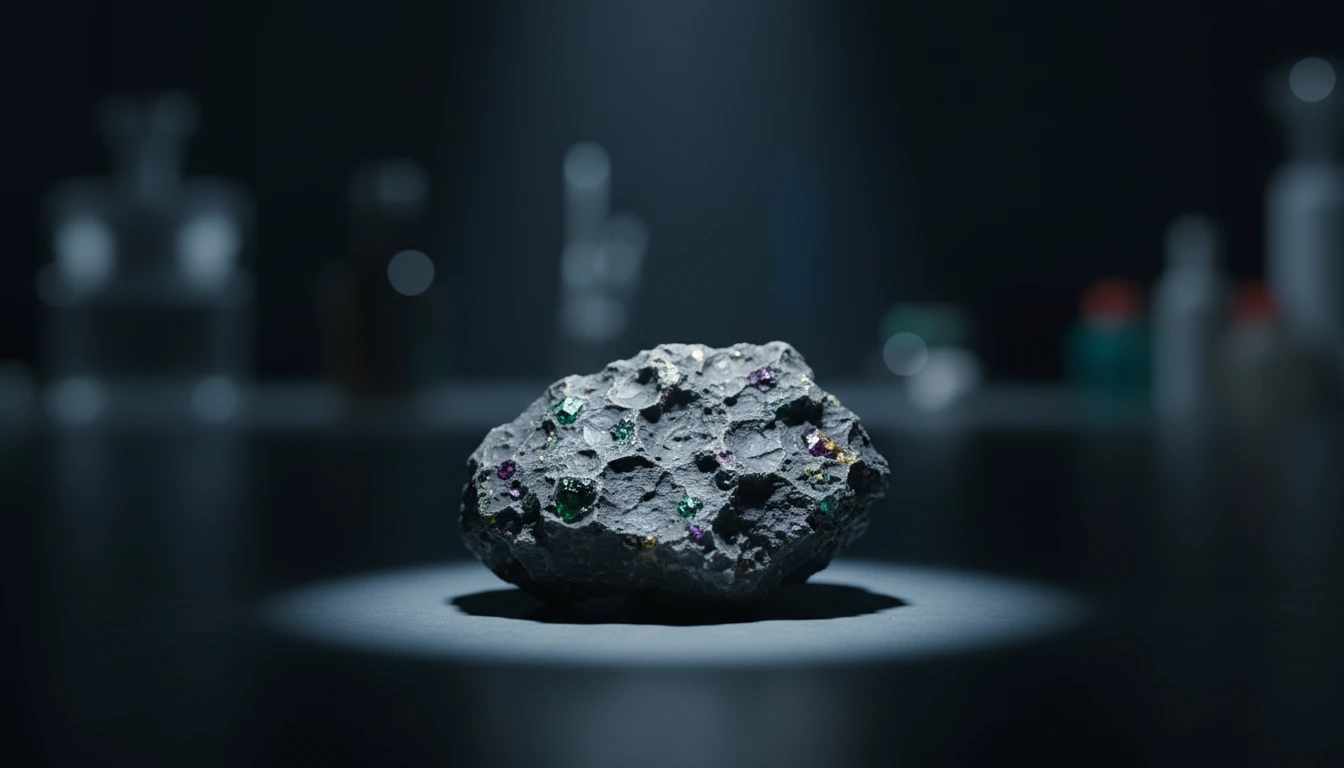
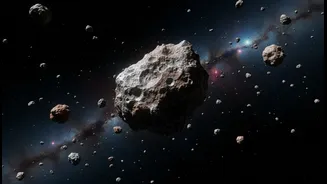
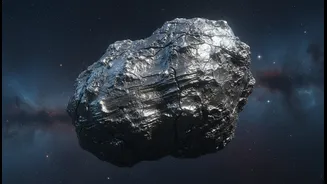
The analysis revealed that the Hillsborough meteorite is a rare type known as a CM-type carbonaceous chondrite. These are primitive rocks, considered building blocks of planets, that contain carbon compounds and minerals altered by water. Specifically, the Hillsborough rock is classified as a CM1/2, a very rare intermediate type. Scientists believe it originated from the Erigone asteroid family in the inner part of the asteroid belt. The story goes back millions of years: a large collision created a family of asteroids, and a smaller, more recent collision about six million years ago sent a fragment on a path towards Earth. This makes the meteorite a direct sample from a known region of the solar system, providing context that is often missing with other space rocks.
A Salty Time Capsule with Life's Ingredients
What makes the Hillsborough meteorite truly exceptional is what was found inside. The pristine sample contained evidence of ancient salty brines, something never before confirmed in this type of meteorite. These brines, or salty water, once flowed through the parent asteroid, altering its minerals and leaving behind preserved salts. Even more exciting was the discovery of a complex suite of organic compounds, including amino acids. Many of these amino acids are rare or non-existent on Earth, confirming their extraterrestrial origin. This discovery strongly supports the long-held theory that asteroids and meteorites could have delivered the essential chemical building blocks for life to a young Earth billions of years ago.