



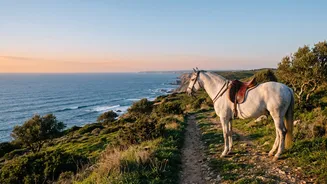
The Rota Vicentina Historical Way
Forget typical coastal holiday paths; the Rota Vicentina’s Historical Way (Caminho Histórico) takes you deep into the heartland of the Alentejo and Algarve regions. This 263-kilometre trail, running from Santiago do Cacém to the dramatic cliffs of Cabo
de São Vicente, uses routes that have been vital arteries for centuries. Walkers traverse cork oak forests, rolling hills, and quiet villages on paths once used by locals and pilgrims. The trail is a journey through time, recognised as one of the best walking destinations in Europe. It offers an unhurried, authentic glimpse into a rural Portugal that moves at the pace of footsteps, far from the bustling tourist hubs. While the famous Fishermen's Trail hugs the coast, the Historical Way offers a different kind of immersion—one defined by the quiet continuity of culture and nature.
The Portuguese Way of St. James
Long before it became a popular hiking route, the Caminho Português de Santiago was a path of profound faith. One of the main pilgrimage routes to the shrine of St. James in Santiago de Compostela, Spain, it has been walked by millions for over a thousand years, including Queen Isabel of Portugal in the 14th century. The routes—starting from Lisbon or, more commonly, Porto—are not just physically demanding but spiritually resonant. Walkers follow ancient Roman roads, cross medieval bridges, and pass through historic towns like Ponte de Lima and Tui. The journey is marked by the iconic scallop shell, the symbol of the Camino, and a powerful sense of camaraderie with fellow pilgrims from around the world. It’s a trail where personal challenge meets a millennium of shared history, creating an experience that transcends a simple long-distance walk.
The Grand Route of the Historical Villages (GR22)
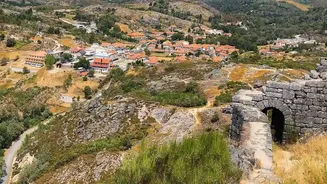
For a journey into Portugal's strategic and medieval past, the GR22 is unparalleled. This circular route of roughly 600 kilometres links 12 fortified villages near the Spanish border. These are not quaint, sleepy hamlets; they are stone-built testaments to a history of conflict and resilience. Villages like Monsanto, with houses wedged between giant boulders, and Sortelha, with its imposing castle walls, were critical defensive posts. The trail itself winds through some of Portugal's most stunning and protected landscapes, including the Serra da Estrela and Tejo International natural parks. Awarded the 'Leading Quality Trails – Best of Europe' seal, the GR22 offers hikers a chance to conquer more than just terrain; it's an opportunity to walk through a landscape shaped by centuries of national identity and defence.
The Via Algarviana
While the Algarve is famous for its sun-drenched beaches, the Via Algarviana (GR13) invites adventurers to discover its lesser-known interior. This 300-kilometre trail stretches from Alcoutim on the Spanish border to Cabo de São Vicente, following ancient paths that once connected rural communities to the coast. Inaugurated in 2009, the trail was designed to promote sustainable tourism by reviving these old routes, which were used by pilgrims and traders for centuries. As you hike through rolling hills, past olive groves, and through tranquil villages like Salir, you’re experiencing the authentic, agricultural soul of the region. It’s a route that showcases the Algarve's rich cultural history and natural beauty, proving there is far more to Portugal's southern region than just its coastline.