


More Than Just a Light Show
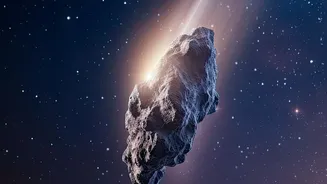
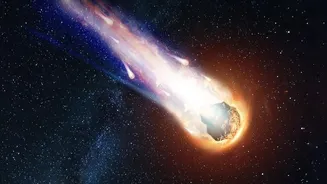
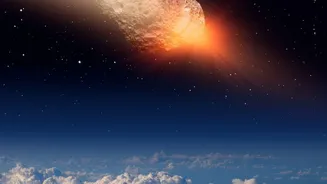
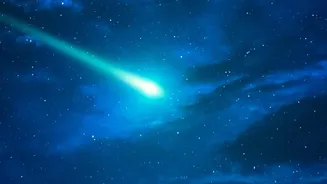
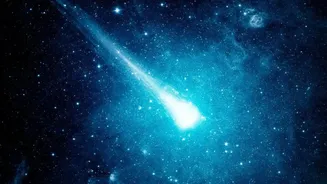
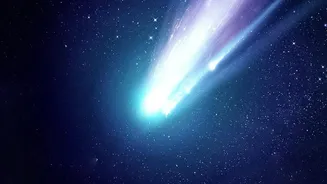
Each year, as Earth orbits the sun, it ploughs through streams of cosmic debris left behind by comets and asteroids. When these tiny particles, often no bigger than a grain of sand, hit our atmosphere at immense speeds, they burn up and create the spectacle
we call meteors, or shooting stars. The image highlighted by NASA is a powerful reminder that August is a prime month for skywatching, with the famous Perseid meteor shower set to peak around August 12-13. This year's Perseids promise to be particularly spectacular, as the peak coincides with a new moon, providing dark skies for optimal viewing. But for scientists, these events are not just for stargazing; they are valuable opportunities to gather data on the building blocks of our solar system.
Cosmic Fingerprints in the Sky
The key to unlocking the science behind these fireballs lies in a process called spectroscopy. As a meteoroid enters the atmosphere, the intense friction heats it to thousands of degrees, causing the minerals it's made of to vaporise. Each chemical element, when incinerated, emits light in a unique set of colours — a specific spectral fingerprint. By capturing the light from a meteor and splitting it into its constituent colours using specialised instruments, scientists can read these fingerprints. An experiment on the International Space Station, for example, is dedicated to studying the chemical composition of meteors as they enter the atmosphere. This technique allows researchers to determine exactly what the meteor was made of without ever holding a piece of it in their hands.
Reading the Rainbow of Elements
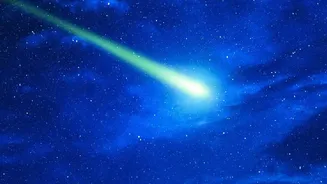
The various colours seen in a meteor's trail are direct clues to its composition. A meteor rich in sodium will burn with a bright orange-yellow glow, while iron produces a yellow-white light. The presence of magnesium can create a beautiful blue-green streak, and calcium may appear as a violet hue. Even the surrounding air gets in on the act; the red glow sometimes seen is often due to the heating of nitrogen and oxygen in the atmosphere itself. By analysing the intensity of these different colours, scientists can deduce the relative abundance of various elements in the original meteoroid. This provides a snapshot of the material that has been drifting through our solar system for billions of years.
Clues to Our Solar System's Past
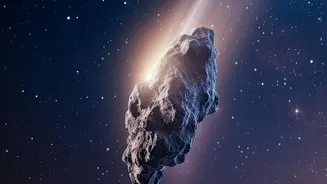
Why does this matter so much? Because these meteoroids are pristine relics from the formation of our solar system over 4.5 billion years ago. They are the leftover raw materials that never quite made it into a planet. By studying their composition, we can learn about the conditions in the primordial cloud of gas and dust from which the sun, Earth, and all other planets were born. Some meteorites have been found to contain organic compounds and even the building blocks for molecules necessary for life, suggesting that these ancient space rocks may have delivered key ingredients to early Earth. Each vaporising meteor is a tiny piece of a giant puzzle, helping us write the history of our own cosmic neighbourhood.
A Shield for Planet Earth
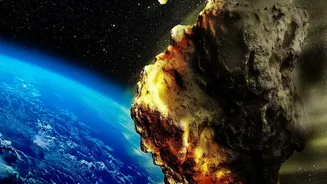
Beyond understanding our origins, studying the composition of meteors has a more immediate, practical application: planetary defense. Knowing what an object is made of—whether it's a dense chunk of iron or a more porous, rocky body—is critical for predicting its behaviour. If a larger asteroid were ever found to be on a collision course with Earth, understanding its composition would be vital for planning any potential deflection mission. Data gathered from countless vaporising meteors helps build a comprehensive catalogue of the types of materials zipping through our corner of space, refining the models that keep our planet safe. Each flash of light informs our understanding of potential hazards and how we might one day deal with them.