







What is Mission-02?
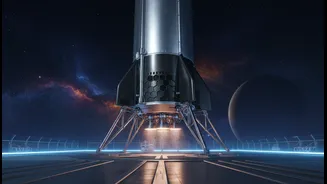
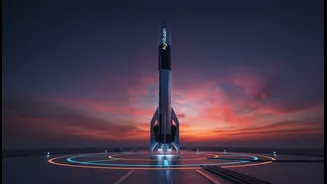
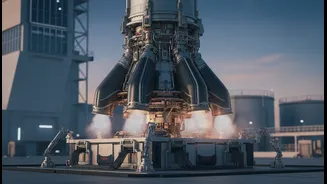
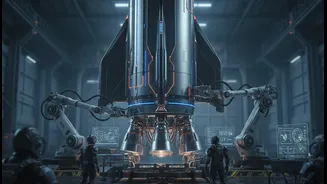
Mission-02 is the next major step for Agnikul Cosmos, following its successful suborbital test flight, Agnibaan SOrTeD, in May 2024. This upcoming mission has two groundbreaking objectives. The primary goal is to launch the two-stage Agnibaan rocket and
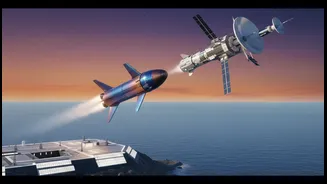
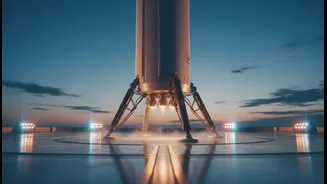
place customer satellites into orbit. The secondary, and arguably more revolutionary, goal is to recover the rocket's first stage after it separates. This involves a controlled descent and a planned splashdown in the ocean for retrieval. This feat has never been attempted by a private Indian company on an orbital-class vehicle, marking a significant moment in the country's space journey.
A Double Innovation in a Single Flight
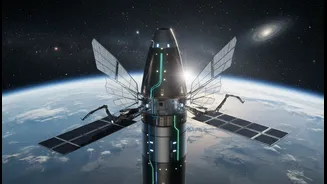
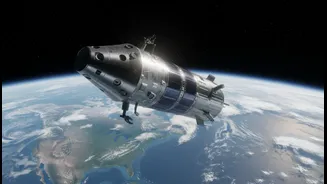
Beyond just recovering the booster, Agnikul is also innovating with the rocket's upper stage. Typically, this part of the rocket becomes space debris after deploying its payload. However, for Mission-02, Agnikul aims to convert the upper stage into a functional, in-orbit platform. This concept, for which Agnikul holds patents in India, the US, and Europe, would allow the spent hardware to host experiments or test new technologies, effectively giving it a second life and creating value from what would otherwise be junk. This dual approach of recovering the first stage and repurposing the second demonstrates a deep commitment to sustainability and efficiency.
Why Is Reusability a Game-Changer?
The quest for reusable rockets is about one thing above all: economics. Companies like SpaceX have shown that recovering and reusing rocket boosters can slash the cost of accessing space by up to 80%. Traditional rockets are single-use; building a new one for every launch is incredibly expensive. By making the most expensive parts of the rocket reusable, a company can launch more frequently and at a much lower price point. This shift transforms spaceflight from a one-off, government-led endeavour into a commercially viable transportation system. For India, mastering this technology would make it a highly competitive player in the multi-billion dollar global satellite launch market.
Meet Agnikul Cosmos
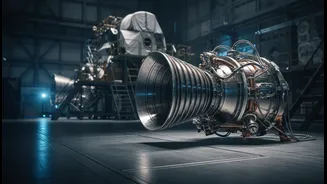
Incubated at IIT Madras, Agnikul Cosmos has quickly become a frontrunner in India's burgeoning private space industry. The company has distinguished itself through cutting-edge technology, most notably the Agnilet engine—the world's first single-piece, 3D-printed, semi-cryogenic rocket engine. This innovation significantly speeds up manufacturing time and reduces complexity. Their first launch in 2024 was conducted from India's first private launchpad, another milestone for the ecosystem. The company's progress has attracted significant investment and even brought former ISRO Chairman S. Somanath onto its board as an observer, a testament to its promising future.
India's Race to the Future
Agnikul's attempt comes at a crucial time. Globally, the race for reusable rocket technology is heating up, with the US, and more recently China, making significant strides. While India's national space agency, ISRO, is also developing its own larger reusable launch vehicle, private startups like Agnikul and Skyroot Aerospace appear poised to achieve this milestone first on a commercial scale. Success for Agnikul in Mission-02 would not just be a technical victory; it would be a powerful statement that India's private sector is ready to innovate and compete with the best in the world, securing the nation's future in the commercial space economy.