

Understanding Greatest Elongation
First, let's unpack the astronomical jargon. "Greatest elongation" is the point when a planet orbiting closer to the Sun than Earth—namely Venus or Mercury—reaches its maximum apparent distance from the Sun in our sky. Because Venus is tethered to the Sun from our perspective,
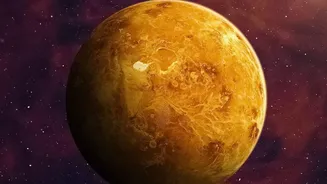
it never appears high in the sky at midnight. It's always seen as either an "evening star" after sunset or a "morning star" before sunrise. An eastern elongation means Venus is visible in the evening, and on August 15, 2026, it will reach its farthest point east of the Sun. This event, happening at 06:00 UTC on August 15, marks the peak of its evening visibility, placing it at a wide 46-degree separation from the Sun.
Venus Takes Centre Stage
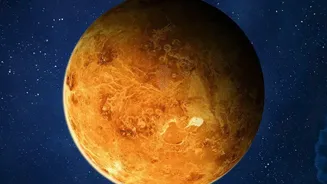
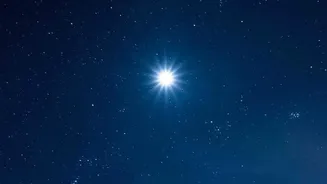
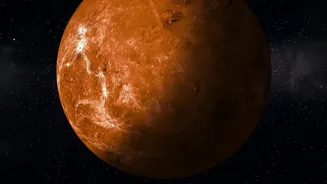
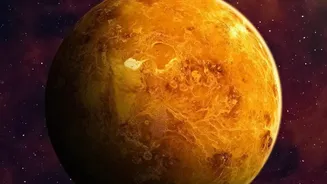
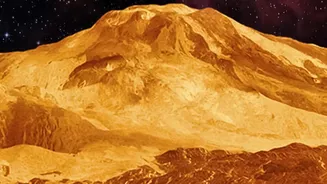
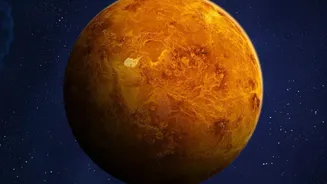
This August, Venus is the undisputed star of the evening sky. All month long, it dominates the western view after sunset, shining at a dazzling magnitude of -4.4, making it brighter than any other star or planet. Its brilliance is so intense that you can often spot it even while the sky is still painted with the colours of twilight. The mid-August elongation is the prime time for viewing because the planet is both bright and at its highest point above the horizon for this apparition. Through a telescope, Venus will reveal a fascinating sight: it will appear about half-illuminated, looking like a tiny quarter moon. This phase occurs because, from our viewpoint, we are seeing the side of Venus that is partially lit by the Sun. On the evening of August 15, the crescent Moon will also appear near the brilliant planet, making for a particularly beautiful pairing.
How to See the Evening Star
The best part about this celestial event is its accessibility. You don't need any special equipment to see Venus; its brilliance makes it easily visible to the naked eye. Simply find a location with a clear, unobstructed view of the western horizon. Shortly after sunset, as the sky begins to darken, look for the brightest point of light. That will be Venus. While a telescope will reveal its phase, a simple pair of binoculars can enhance the view and make the planet appear as a distinct, bright disc rather than just a point of light. For viewers in India, the key is to look west in the evening twilight. The planet will be relatively low, so a spot without tall buildings or trees blocking the horizon will provide the best experience.
An August Sky Full of Wonders
While Venus is the headliner, August 2026 is a blockbuster month for skywatching. The famous Perseid meteor shower peaks on the night of August 12-13, and with the New Moon occurring at the same time, the sky will be perfectly dark for spotting shooting stars. Observers could see up to 100 meteors per hour under ideal conditions. For early risers, a spectacular pre-dawn alignment of six planets—Jupiter, Mercury, Mars, Uranus, Saturn, and Neptune—will be visible around August 12. Though Venus won't be part of this morning parade, patient observers can catch it in the evening, effectively seeing all seven other planets in a single night. Saturn will also be well-positioned for viewing all month, rising in the evening and offering excellent telescopic views.