








A Race Starting at the Farm
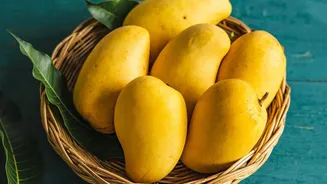
The journey begins long before the airport. For highly perishable items like fruit, logistics planning starts with the harvest itself. Fruits destined for export, such as the Neelam and Totapuri mangoes recently sent from Karnataka's Kolar district, must
be picked at the precise moment of maturity. They need to be firm enough to withstand the journey but sufficiently developed to ripen perfectly upon arrival. This initial step is critical; a miscalculation here can lead to the entire shipment spoiling. For this shipment, the mangoes were sourced directly from farmers part of a Farmer Producer Company (FPC), a model designed to connect growers directly with buyers and ensure quality control from the very start.
The Unbreakable Cold Chain
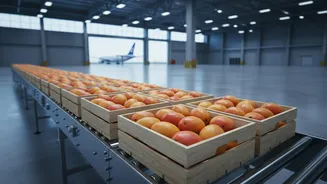
Once harvested, the fruit enters the 'cold chain'—an uninterrupted series of refrigerated environments designed to preserve freshness. This is the most critical element in perishable logistics. The process involves pre-cooling the fruit to lower its pulp temperature before it's loaded into refrigerated trucks, often called 'reefer' trucks. Any break in this chain, from the pack-house to the airport cargo terminal, can accelerate ripening and spoilage. Kempegowda International Airport in Bengaluru, a major hub for perishable exports, has dedicated cold zones with temperatures ranging from -25°C to +8°C to maintain this integrity. This infrastructure is vital, as it allows produce to be held at its optimal temperature right up until it's loaded onto the plane.
Navigating a Maze of Paperwork
Moving food across borders requires a mountain of documentation. Exporters must secure an Import-Export Code (IEC), register with the Agricultural and Processed Food Products Export Development Authority (APEDA), and often obtain an FSSAI license. Each shipment needs a phytosanitary certificate from India's plant quarantine authorities to prove it is free from pests and diseases. Furthermore, the destination country has its own set of import regulations. This bureaucratic maze must be navigated swiftly and without error. A single missing document or incorrect form can lead to costly delays at customs, which is a death sentence for time-sensitive cargo like fresh fruit.
Why Air Freight is a Game-Changer
While sea freight is more common for bulk transport, the 15-40 day transit time is too long for delicate, ripe fruits with a short shelf life. Air freight, though more expensive, is essential. It slashes transit time from weeks to hours, ensuring the fruit arrives fresh. The recent one-metric-tonne shipment of mangoes to the Maldives is a perfect example; air travel was the only viable method to maintain quality. This speed allows Indian farmers to access high-value international markets that would otherwise be unreachable. Bengaluru's airport has become a leader in this space, handling a record 63,188 tonnes of perishable exports in 2023-24. This capability not only boosts exports but also significantly increases the income for farmers, who in the case of the Maldives shipment, earned over 50% more than they would have in domestic markets.
Connecting Farmers to the World
Ultimately, the success of such shipments hinges on coordination between multiple players. Government bodies like APEDA play a crucial role by facilitating market access and helping exporters navigate regulations. Farmer Producer Companies (FPCs) empower small-scale farmers by aggregating their produce, ensuring consistent quality, and connecting them with international buyers. This direct linkage eliminates intermediaries and secures better prices. The recent shipment, handled by a woman-led enterprise, also highlights the growing role of diverse entrepreneurs in India's agricultural export story. Each successful shipment strengthens India’s reputation as a reliable supplier of high-quality produce and opens new economic avenues for its agricultural communities.