
The Allure and Agony of Khandvi
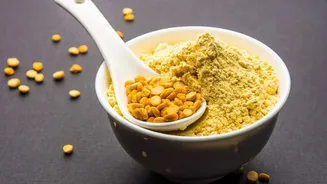
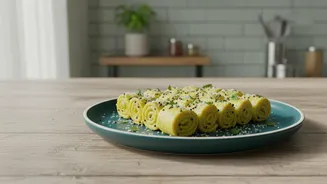
Khandvi is a beloved savoury snack, soft, light, and flavourful. Made from a simple batter of gram flour (besan), yoghurt, and spices, its beauty lies in its silky texture and elegant, pinwheel-like appearance. Yet, it has a reputation for being notoriously
difficult to master. The entire success of the dish hinges on cooking the batter to the perfect consistency. If it's undercooked, you're left with a sticky mess that refuses to set or roll. If it's overcooked, the mixture becomes too thick, cracking and breaking as you try to spread or roll it. This fine line between success and failure is where many cooking adventures end in frustration.
The Science Behind the Batter
The process begins with a smooth, lump-free batter, typically made by whisking gram flour with sour yoghurt or buttermilk and water. Constant stirring over a low flame is non-negotiable. This prevents lumps and ensures the gram flour cooks evenly. As the mixture heats, the proteins in the gram flour and yoghurt begin to denature and the starches gelatinise, causing the batter to thicken significantly. The goal is to stop cooking at the precise moment it transforms into a thick, glossy paste that is spreadable but not runny. This transformation can take anywhere from 15 to 20 minutes of continuous, patient stirring.
The Plate Test: Your Key to Success
This is the moment of truth. To know if your batter is perfectly cooked, you must perform the plate test. While the batter is still hot in the pan, take a small spoonful and spread it thinly onto a greased plate or the back of a steel spatula. Let it sit for about a minute or two to cool down. After it has cooled, try to lift the edge with your finger or a knife and gently push it forward to roll it. If the batter sets, peels away cleanly from the plate, and forms a neat little roll without sticking or breaking, it's ready. This simple check removes all the guesswork and is the single most important step to mastering khandvi.
Interpreting the Test Results
The test tells you exactly what to do next. If you try to roll the sample and it’s gooey, sticky, or won't lift from the plate, your batter is undercooked. You need to return to the stove and continue cooking and stirring for a few more minutes before testing again. On the other hand, if the sample seems brittle or cracks immediately when you try to roll it, the batter may be slightly overcooked. There isn't much you can do at this stage except work extremely fast to spread the rest of the batter before it seizes up completely. An overcooked batter is often the cause of khandvi that breaks while rolling.
From Batter to Roll: Acting Fast
Once your batter passes the plate test, speed is critical. The mixture begins to set the moment it's off the heat, so you must work quickly. Immediately pour ladlefuls of the hot paste onto your prepared surfaces — traditionally the back of greased steel plates (thalis) or a clean kitchen counter. Using a spatula, spread the batter into a very thin, even layer. The thinner the layer, the more delicate and easy to roll your khandvi will be. Let the spread sheets cool for about five to ten minutes, until they are firm to the touch. Then, using a knife, cut them into two-inch-wide vertical strips, gently peel up one end, and roll them into tight, perfect spirals.