







The Day the Skies Stood Still
It has become an unnerving feature of modern American air travel: a sudden, nationwide halt to all departing flights. A significant event in January 2023 saw the Federal Aviation Administration (FAA) ground thousands of aircraft, the first time it had
done so since the September 11 attacks. More recently, a similar shutdown on November 13, 2026, again plunged airports into chaos. In both cases, the cause was not a security threat but a technological failure within the FAA's critical infrastructure. The 2023 incident was traced to a contractor accidentally deleting key files in a pilot alert system. The late 2026 event was linked to a telecommunications network failure during an upgrade, where a new router apparently overwhelmed older parts of the system. These events exposed the fragility of the systems that manage the world's busiest airspace.
What Is the NOTAM System?
At the heart of the 2023 disruption was the Notice to Air Missions, or NOTAM, system. This is not the glamorous, radar-sweeping part of air traffic control, but it is just as vital. The NOTAM system is essentially a digital bulletin board that provides pilots with real-time, critical safety alerts before they take off. These notices can include information about closed runways, flocks of birds, construction hazards, or changes in navigation aids. The system that failed was decades old, built in 1985, and lacked the redundancies and fail-safes common in modern IT architecture. When a contractor unintentionally deleted files while synchronizing a primary and backup database, the entire system went down, leaving pilots unable to access essential pre-flight safety information and forcing the FAA's hand.
A Decades-Old Digital Weakness
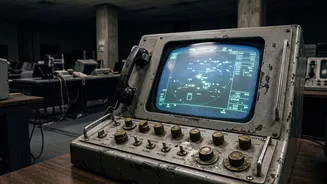
Government Accountability Office (GAO) reports have for years warned about the state of the FAA's technology. A September 2026 report noted that over 75 percent of the FAA's 138 air traffic control systems were considered unsustainable or potentially unsustainable due to their age. Many systems rely on obsolete hardware, including computer screens from the 1980s, and some facilities were, until recently, still using floppy disks. This 'technological debt' means the agency has spent more money maintaining old equipment than acquiring new technology. The problem is not just about old computers; it's about a fragile architecture. The 2023 outage was caused by a damaged database file, and the system's lack of a modern, independent backup meant the corruption spread, leading to a total failure.
The Investigation and the Path Forward
Following the ground stops, investigations were immediately launched. While no evidence of a cyberattack was found in either major incident, the inquiries have put a glaring spotlight on the FAA's modernization process. The investigation into the November 2026 outage has focused on a router installed by contractor L3Harris, with the FBI assisting the FAA in analyzing the equipment to determine if the failure was due to faulty hardware, incorrect installation, or other factors. In response to these systemic failures, the FAA has been pursuing a massive modernization plan, often referred to as NextGen and, more recently, the Brand New Air Traffic Control System (BNATCS) initiative. In July 2025, Congress approved $12.5 billion to upgrade hardware, software, and telecommunications, including replacing 1960s-era copper wires with fiber optics.
More Than Just a Quick Fix
While progress is being made—the FAA reported that the old NOTAM system was officially replaced by a new, more resilient cloud-based platform in April 2026—the challenge is immense. The GAO has expressed concern that the FAA may be prioritizing speed over careful planning, noting the agency has struggled to integrate over 11,000 individual project schedules and lacks a comprehensive cost estimate for its ambitious goals. After the November 2026 outage, the Transportation Secretary called for an additional $50 billion to complete the modernization, arguing that the existing network architecture itself, not just its components, needs a complete overhaul. The incidents have revealed a complex web of aging government systems and reliance on private contractors, making accountability and effective oversight crucial for any meaningful change.