


A Cookie Made From Plastic?
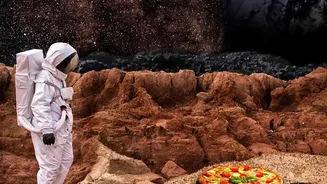
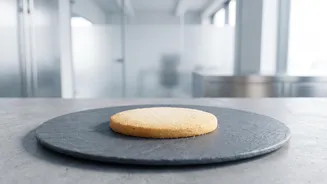
In August 2026, researchers at Southern Illinois University announced a startling creation: a 3D-printed cookie made partly from upcycled plastic. The project, part of NASA's Deep Space Food Challenge, aims to solve the monumental task of feeding astronauts
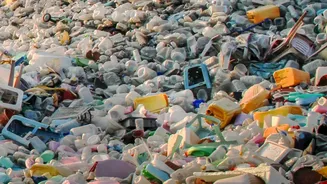
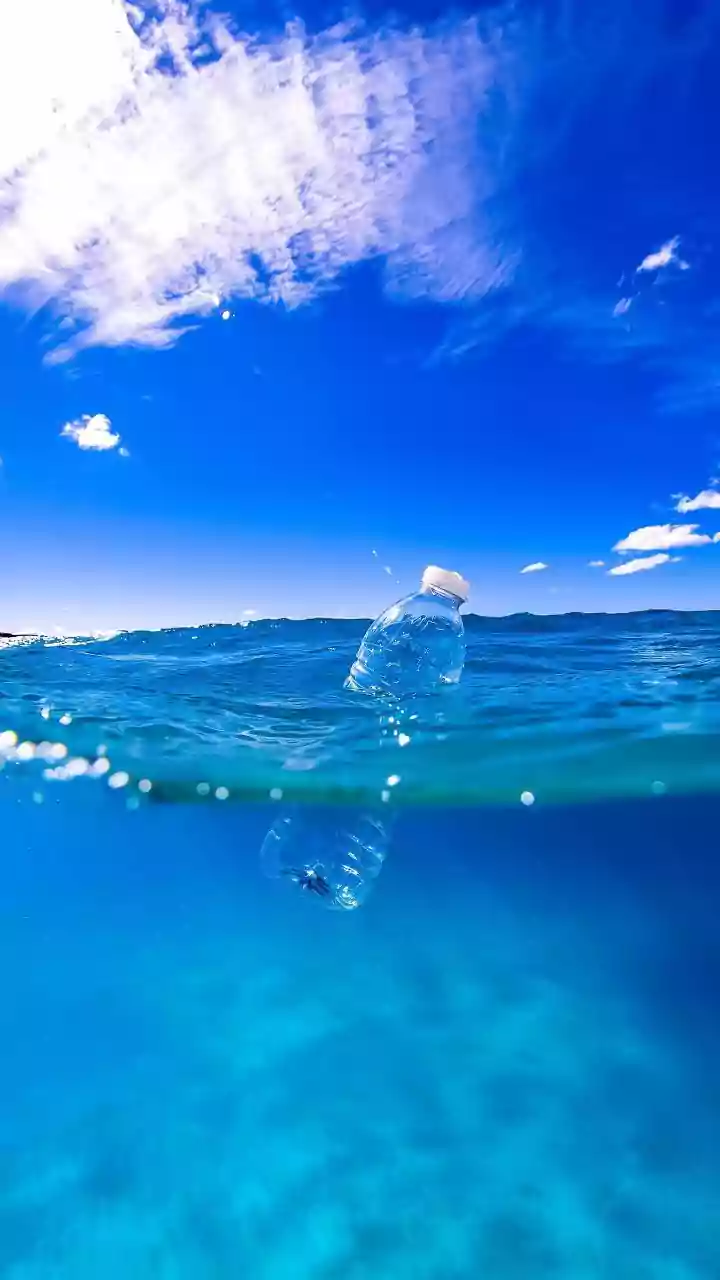
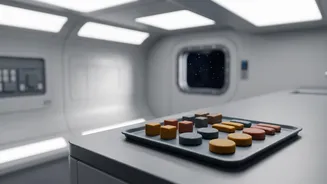
on long journeys, like a three-year round-trip to Mars. The process, called oxidative hydrothermal dissolution, uses intense heat, pressure, and oxygen to break down waste materials like PET plastic bottles and inedible plant matter into their basic carbon building blocks. Specially engineered microbes, primarily different strains of yeast, are then put to work. These microscopic factories consume the broken-down molecules and transform them into essential nutrients like proteins and fats. Other yeast strains are programmed to produce flavorings, such as vanillin, and nutrients like beta-carotene, a precursor to vitamin A. The resulting nutritious slurry is then extruded by a 3D printer into small, disc-shaped snacks dubbed "µBites" (pronounced microbites). While awaiting final approval for human taste tests, the researchers note the cookies already receive high marks for their aroma.
The Ultimate Recycling Program
Other scientists are tackling an even more personal source of waste. At Penn State University, a team has demonstrated that human waste can be converted into a safe, edible substance. This closed-loop system would be invaluable for deep-space missions where every resource must be recycled. The process begins with anaerobic digestion, where microbes break down solid and liquid waste in an enclosed reactor, producing methane. This methane is then fed to a different microbe, Methylococcus capsulatus, which is currently used to produce animal feed on Earth. The result is a sterile, edible biomass that is 52% protein and 36% fats. Researchers have compared the potential final product to a microbial 'goo' with a consistency similar to Marmite or Vegemite—a nutrient-dense paste that could provide critical sustenance for astronauts far from home. This concept represents the pinnacle of self-sufficiency, turning a mission's unavoidable byproduct into a vital source of nutrition.
Food From Thin Air
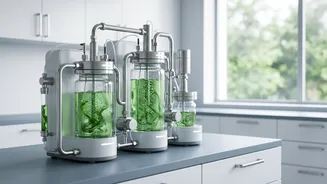
The definition of 'waste' is also expanding to include greenhouse gases. The Finnish company Solar Foods has developed a groundbreaking method to create a protein-rich powder, called Solein, literally out of thin air. Their process uses renewable electricity to split water into hydrogen and oxygen through hydrolysis. In a bioreactor similar to a brewery's fermenter, microbes are then fed a diet of this hydrogen, along with carbon dioxide captured from the atmosphere, and a handful of mineral nutrients. The resulting flour-like substance is about 65-70% protein, contains all nine essential amino acids, and has a neutral taste, making it a versatile ingredient. Solar Foods has already developed concepts for products ranging from ice cream and mayonnaise to a protein drink. Because it is not dependent on agriculture, land, or weather, this technology could be deployed anywhere, from deserts and arctic zones to a potential habitat on Mars.
Challenges and Earthly Applications
Despite its promise, waste-based food faces significant hurdles. The first is psychological: the 'yuck' factor of eating something derived from plastic or human feces is a major barrier to public acceptance. Secondly, rigorous safety testing is essential to ensure no harmful compounds from the original waste material make it into the final product. Finally, scaling up production to make these methods cost-effective is a major challenge. The initial µBites, for example, cost an estimated $60 per kilogram to produce. However, the potential benefits extend far beyond space exploration. These technologies could one day be deployed in disaster zones, providing on-demand nutrition when supply chains are broken. On a larger scale, upcycling agricultural and industrial waste into mycoprotein—protein from fungi—could help create a circular economy, reduce landfill pressure, and provide a sustainable answer to rising global food demand.