
What Happened on the Phuket-Delhi Flight?
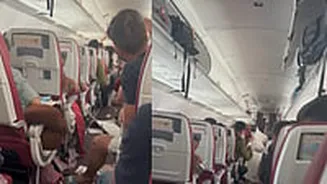
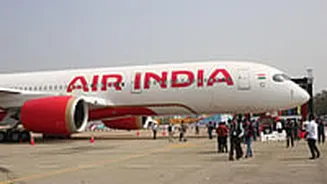
An Air India flight, AI2379, travelling from Phuket to Delhi encountered a pocket of severe turbulence during its cruise. The event was described as a sudden, brief, but violent jolt that resulted in the aircraft losing approximately 300 feet in altitude
before the pilots regained stability. The encounter, which reportedly lasted for four to five minutes, was significant enough to cause injuries to 17 people on board, comprising 13 passengers and four crew members. While the passengers' injuries were mostly minor, some crew members sustained more serious neck and spinal injuries requiring hospitalization. The flight landed safely in Delhi, where medical teams were on standby to provide immediate assistance. India's aviation regulator, the DGCA, has launched a formal investigation, securing the flight data and cockpit voice recorders to understand the precise sequence of events.
The Invisible Force: Understanding Severe Turbulence
Turbulence is essentially unstable air movement that causes an aircraft to bump or jolt. While light to moderate turbulence is common, severe turbulence is a different beast. It is defined by large, abrupt changes in altitude and can cause an aircraft to be momentarily out of control. Occupants can be forced violently against their seatbelts if fastened. Often, the culprit in these high-altitude incidents is Clear Air Turbulence (CAT), which is impossible to see with the naked eye and cannot be detected by conventional weather radar because it doesn't contain water droplets. CAT occurs when bodies of air moving at different speeds meet, typically at high altitudes in and around the jet stream. The aircraft is flying smoothly one moment and hits this invisible churning air the next, leading to a sudden, unexpected disturbance.
Is a 300-Foot Drop a 'Plunge'?
For passengers, a 300-foot drop can feel like a terrifying plunge. Due to inertia, anyone not securely belted in will continue to move upwards as the plane drops, leading to a sensation of being thrown towards the ceiling. This is why most turbulence-related injuries occur. However, in aviation terms, while a 300-foot deviation is significant and marks a severe event, it is not an uncontrolled fall. Modern commercial aircraft cruise at altitudes of 30,000 to 40,000 feet. The aircraft remains under the crew's command, and they are trained to correct such deviations swiftly. Analysis of flight data from similar incidents often shows that the descent rate, while fast, is still within the aircraft's operational capabilities. The plane is not falling out of the sky; rather, it is being pushed down by a powerful air current.
Aircraft Control: How Pilots Respond
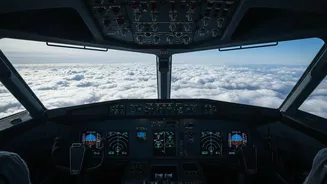
When an aircraft encounters severe turbulence, pilot training immediately kicks in. The primary rule is not to fight the turbulence. Instead of making aggressive control inputs to counteract the altitude changes, pilots will often slow the aircraft to a designated 'turbulence penetration speed'. This speed reduces the stress on the airframe, much like slowing a car down to go over a large speed bump. The goal is to maintain a stable attitude and allow the aircraft to ride out the disturbance. Autopilot systems may disconnect during severe turbulence, requiring pilots to take manual control. They focus on keeping the wings level and managing the engine thrust to maintain a safe speed and altitude range until they exit the turbulent air. The investigation of flight AI2379's recorders will reveal the specific actions the crew took to manage the situation and ensure a safe landing.
The Single Most Effective Safety Measure
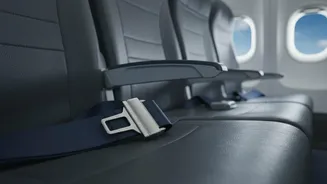
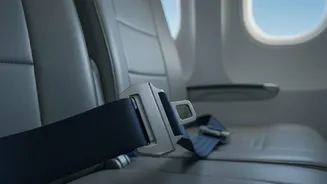
Aviation experts and safety agencies are unanimous on one point: the vast majority of serious injuries from turbulence are preventable. They happen to passengers and crew who are not wearing their seatbelts. The forces in severe turbulence can easily lift a person out of their seat. Incidents like the one on the Phuket-Delhi flight are a stark reminder of why airlines recommend keeping your seatbelt fastened whenever you are seated, even if the seatbelt sign is off. It is the single most effective way to protect yourself from the unpredictable nature of clear-air turbulence. Aircraft are built to withstand these forces, but the human body is not.