






The Science of 'Too Hot'
The good news first: your love for tea or coffee is not the problem. In 2016, the International Agency for Research on Cancer (IARC), a part of the World Health Organization, took a close look at this issue. After reviewing over 1,000 studies, they concluded
that coffee itself is not carcinogenic. Instead, the focus shifted to temperature. The IARC classified drinking any beverage at a temperature above 65° Celsius (149° Fahrenheit) as "probably carcinogenic to humans". This puts scalding hot drinks in a risk category because of their potential to cause physical injury, not due to their chemical properties. The key takeaway from the global body of research is clear: it's the heat, not the brew, that requires our attention.
How Does Heat Harm the Oesophagus?
The oesophagus, or food pipe, is a muscular tube that carries food and liquid from your throat to your stomach. Its lining is made of delicate tissue. When you repeatedly consume liquids that are excessively hot, you risk causing what is known as thermal injury. Think of it as a recurring, low-grade burn. This repeated damage can lead to chronic inflammation in the oesophageal lining. Over a long period, this state of constant injury and repair can increase the rate of cell turnover, which may elevate the chances of abnormal cell development and, in the worst-case scenario, lead to a specific type of cancer called oesophageal squamous cell carcinoma (SCC). Studies show that the risk increases with both the temperature and the frequency of consuming very hot drinks.
What Does 65° Celsius Feel Like?
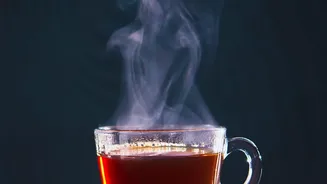
The 65°C threshold might sound abstract, but it's easier to gauge than you think. It's hotter than what most people would consider comfortably warm. If a drink is steaming heavily, if you can't hold the cup comfortably for more than a few seconds, or if you have to sip it very carefully to avoid burning your tongue, it is likely at or above this temperature. For context, coffee is often served in cafes at temperatures between 82-85°C to be held for service. The goal isn't to drink your chai lukewarm, but to avoid that scalding, piping-hot initial temperature. A new large-scale study confirmed this, finding that individuals who described their drinks as 'very hot' had a threefold higher risk of oesophageal SCC compared to those who drank them 'warm'.
A Simple Habit Change for Safer Sipping
The message from health experts is not to give up your beloved tea or coffee. It's to make a small, simple adjustment. The easiest solution is patience. After pouring your boiling-hot chai or brewing your coffee, simply let it sit for a few minutes before you start drinking. How long? There's no magic number, but experts suggest waiting until it is comfortable to drink rather than consuming it while it is still scalding. Another easy trick is to add a small amount of cool water or milk to bring the temperature down more quickly. The idea is to turn a potentially harmful habit into a harmless one with a minor tweak to your routine. You can still enjoy the warmth and comfort of your favourite beverage without putting your oesophageal lining at unnecessary risk.