

Where the Project Stands Today
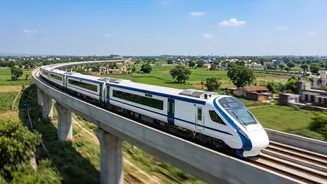
As of September 2026, the bullet train project is a story of significant, visible progress, particularly in Gujarat. Civil construction on the Vapi-Surat section is on track for completion by December 2026. Across the 508-kilometre corridor, hundreds
of kilometres of viaducts and support piers are now in place, transforming the landscape along the route. While the full line to Mumbai is still a few years away, the focus is squarely on a phased launch. Railway Minister Ashwini Vaishnaw has indicated that the first section between Surat and Bilimora is targeted for commissioning in 2027, with services expected to begin in August of that year. This phased approach means that instead of waiting for the entire corridor to be finished, India is set to experience its first bullet train service on a priority stretch sooner than many anticipated.
Overcoming The Hurdles
The journey to 2026 has not been without major challenges. Land acquisition, especially in Maharashtra, caused significant initial delays that have had a lasting impact on timelines. However, these hurdles have largely been overcome, with all required land for the project now acquired. The engineering itself is a monumental task, featuring India's first undersea rail tunnel and numerous river bridges that are now complete. These complexities, combined with the sheer scale of the project, mean the final completion date for the entire Mumbai-Ahmedabad line has been extended, with some estimates pointing towards 2028 or 2029. The project has demonstrated that while mega-projects in India face inevitable roadblocks, a persistent push can clear the path for execution.
More Than Just Speed
The bullet train's significance extends far beyond reducing the travel time between Mumbai and Ahmedabad to around two hours. The project has become a massive engine for economic activity and skill development. According to officials, it has already created around one lakh jobs. A crucial aspect is the push for 'Atmanirbhar Bharat' (Self-Reliant India). While the technology is based on Japan's Shinkansen system, a major emphasis has been placed on domestic manufacturing. The first coach for testing is ready, and an indigenously developed bullet train prototype is expected to begin track tests by May or June 2027. This focus ensures that India is not just importing a train but is also building a domestic ecosystem for high-speed rail technology, which will be vital for future corridors.
The Main Takeaway in 2026
So, what is the ultimate takeaway? In 2026, the main lesson from the bullet train project is one of resilience and national capability. It proves that India can execute complex, long-duration infrastructure projects despite significant delays and challenges. The project has moved from the drawing board to a physical reality of concrete and steel. The phased commissioning strategy is a pragmatic shift, ensuring that the benefits of high-speed rail are delivered to the public as soon as sections become ready. Rather than a story of delay, it has become a story of steady, determined progress. The bullet train is no longer a distant dream; it is an active construction site on the verge of becoming an operational railway line, setting a powerful precedent for the future of infrastructure in the country.