

Kuih Dadar: The Pandan Coconut Crepe
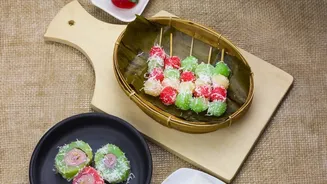
Often called kuih ketayap, this vibrant green snack is a feast for the eyes and the palate. The crepe itself gets its striking colour and subtle, grassy fragrance from pandan leaf juice, a flavour sometimes called the 'vanilla of Asia'. Inside this soft,
delicate pancake is a generous filling of freshly grated coconut cooked with 'gula melaka', or palm sugar. The result is a wonderfully moist and chewy roll that balances the fresh, slightly savoury crepe with a sweet, caramel-like filling. It's a classic teatime snack found in markets and kuih stalls across the country, offering a perfect introduction to Malaysia's love for coconut sweets. The name itself tells its story: 'kuih' means a bite-sized snack, and 'dadar' translates to pancake or roll.
Onde-Onde: The Exploding Palm Sugar Bomb
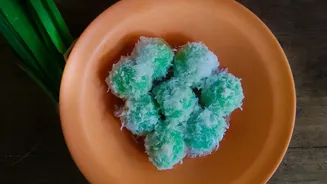
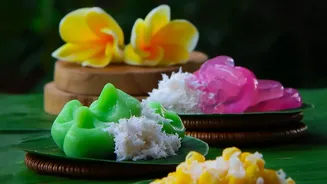
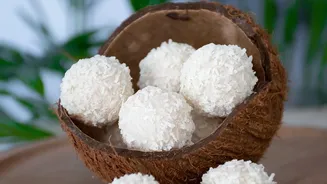
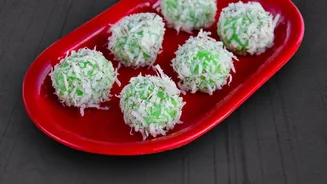
Prepare for a delightful surprise with onde-onde. These small, chewy balls are made from glutinous rice flour, infused with fragrant pandan juice, and then rolled in a snowy coating of freshly grated coconut. But the real magic is hidden inside. Each little sphere contains a nugget of solid gula melaka that melts during the boiling process. When you bite into one, you get a warm, liquid burst of sweet palm sugar syrup, a moment of pure bliss. The soft, chewy exterior and the slightly savoury grated coconut provide the perfect balance to the intensely sweet, liquid centre. Popular in Malaysia, Singapore, and Indonesia (where it's known as klepon), this snack is an experience as much as it is a treat.
Kuih Bangkit: The Melt-in-Your-Mouth Cookie
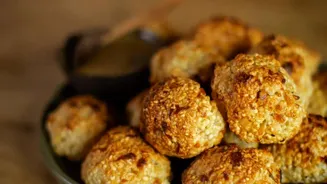
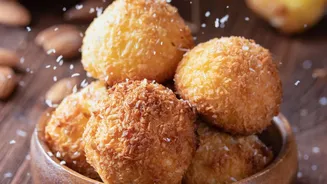
Unlike the soft and chewy kuih, kuih bangkit is a light, airy, and incredibly delicate cookie that dissolves the moment it hits your tongue. The name ‘bangkit’ means ‘to rise’, a nod to how the cookies expand and puff up while baking. Made primarily from tapioca starch, rich coconut cream, sugar, and egg yolks, these cookies have a distinct, creamy coconut flavour. They are traditionally pressed into intricate, beautiful moulds, often shaped like flowers or animals, making them a popular feature during festive seasons like Chinese New Year and Hari Raya. Their crumbly, melt-in-your-mouth texture is achieved by frying the tapioca flour before use, a key step that ensures the signature lightness. It’s a subtle, elegant cookie that showcases a different side of coconut in Malaysian baking.
Sago Gula Melaka: The Chilled Pudding
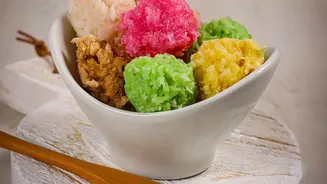
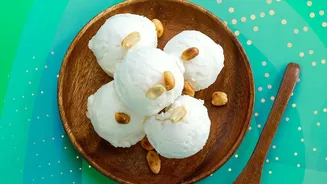
While not a dry snack, no list of Malaysian coconut treats would be complete without this iconic dessert. Sago Gula Melaka is a simple yet profoundly satisfying pudding perfect for a hot day. It consists of a base of translucent sago pearls, which are boiled until they become soft and chewy. The cooked sago, which has a neutral taste on its own, is then chilled and served drenched in two essential components: fresh, creamy coconut milk and a dark, rich syrup made from gula melaka. Often, a pandan leaf is added to both the coconut milk and the syrup for an extra layer of fragrance. The combination of the chewy pearls, the cool and slightly salty coconut milk, and the smoky, caramel-like sweetness of the palm sugar syrup makes for a wonderfully refreshing and decadent dessert.