





A New Pair of Eyes on the Poles
Scientists have long understood that the Arctic and Antarctic play a crucial role in regulating global temperatures. They absorb heat during their sunlit summers and radiate it back into the cosmos during their dark winters. However, a huge portion of
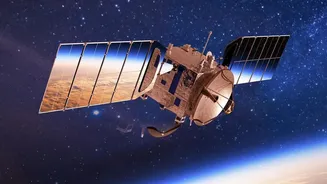
this energy—nearly 60 percent—is released as far-infrared radiation, a type of light invisible to the human eye and, until now, never systematically measured. This has been a significant blind spot in our climate models. To fill this gap, NASA launched the Polar Radiant Energy in the Far-InfraRed Experiment, or PREFIRE. This mission consists of two shoebox-sized satellites, called CubeSats, which have been orbiting over the poles since July 2024. Their job is to measure the full spectrum of heat escaping from these frigid regions.
What Two Years of Data Shows
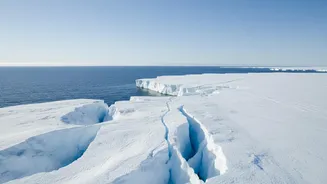
Having completed two full seasonal cycles at each pole, the PREFIRE mission is now providing a continuous record of how heat is released. The data visualisations released by NASA show the poles pulsing with temperature changes, highlighting the stark differences between them. The Arctic, an ocean surrounded by continents, experiences summers warm enough to thaw tundra and melt sea ice. In contrast, Antarctica, a massive ice-covered continent, remains largely below freezing even during its summer. By precisely measuring the far-infrared energy released, scientists can now see how different surfaces, from snow and ice to open water, contribute to this heat release. This detailed information helps scientists understand not just how much heat is escaping, but how clouds and atmospheric water vapour trap some of this heat, influencing the greenhouse effect at the poles.
Making Climate Models Smarter
The data from PREFIRE is more than just a scientific curiosity; it is a critical tool for improving our ability to predict the future of our climate. Climate models are complex simulations of how our planet works, but they are only as good as the data they are built on. By underestimating how much heat is trapped or released at the poles, these models have struggled to accurately project the pace of Arctic warming and sea ice loss. With PREFIRE's precise measurements, scientists can now fine-tune these models. This will lead to more reliable forecasts for everything from ice sheet melt rates and sea-level rise to changes in global weather patterns. The two-year milestone provides a baseline, allowing researchers to test how well their updated models predict changes across seasons and regions.
Why Polar Heat Matters for India
It may seem like events at the top and bottom of the world are far removed from life in India, but our planet's climate system is deeply interconnected. Changes at the poles can have significant ripple effects. The temperature difference between the cold Arctic and warmer southern latitudes is a major driver of the jet stream, the high-altitude winds that steer weather systems across the Northern Hemisphere. A rapidly warming Arctic can weaken or destabilise this jet stream. This can, in turn, influence the behaviour of weather systems like the Western Disturbances, which bring crucial winter precipitation to northern India. Furthermore, recent studies have shown a strong connection between the extent of Arctic sea ice and the intensity and location of the Indian summer monsoon, with less ice often linked to stronger late-season rainfall. Understanding polar dynamics is therefore essential for anticipating changes to India's own life-giving monsoon.