




The Age of Disposable Rockets Is Over
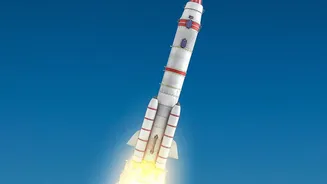
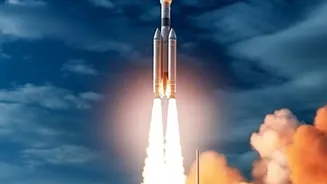
For most of spaceflight history, rockets followed a simple, expensive model: build, launch, and discard. Each mission required brand new, astronomically expensive hardware that would be lost to the ocean or burn up on re-entry. This is like throwing away
an airplane after a single flight. The rocket revolution, pioneered by companies like SpaceX, turned this logic on its head. By developing rockets whose most expensive parts can return to Earth, land themselves, and be flown again, the entire economic equation has changed. Reusability can slash launch costs by up to 65 percent. A rocket booster that costs millions to build becomes exponentially cheaper when its cost is spread across ten or fifteen flights. This isn't just an incremental improvement; it's a paradigm shift that makes launching satellite constellations, deep space missions, and eventually, human space colonies economically viable.
ISRO’s Answer: 'Pushpak' Takes Flight
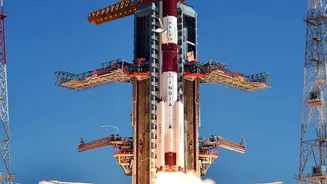
India’s space agency, the Indian Space Research Organisation (ISRO), has not been idle. For years, it has been methodically working on its own Reusable Launch Vehicle (RLV) program. The centerpiece of this effort is a winged vehicle nicknamed 'Pushpak'. Unlike vertically landing boosters, Pushpak is designed to re-enter the atmosphere and land horizontally on a runway like an aircraft. In a major milestone, ISRO successfully completed a hat-trick of autonomous landing experiments (LEX) in 2024. In the final test, Pushpak was dropped from a helicopter at an altitude of 4.5 km and successfully navigated itself to a precise landing, even under challenging wind conditions. These tests have validated crucial technologies needed for an orbital re-entry vehicle, proving ISRO's expertise in autonomous navigation, guidance, and control systems. With these landing tests complete, ISRO is now shifting its focus to developing an orbital reusable vehicle.
Private Startups Join the Race
While ISRO pursues its deliberate, state-led approach, a dynamic private space ecosystem is emerging in India, with startups eager to make their own mark on reusability. Companies like Hyderabad-based Skyroot Aerospace and Chennai's Agnikul Cosmos are moving aggressively. Skyroot, which became India's first private company to launch a rocket into orbit in July 2026 with its Vikram-1, has made reusable technology a long-term goal. Agnikul Cosmos is also developing reusable launch capabilities, with its CEO stating the goal is to recover the first stage of its Agnibaan rocket. The company is leveraging its expertise in 3D-printed engines to build cost-effective rockets designed for reuse from the ground up. This parallel push by the private sector could accelerate India's journey, potentially even beating ISRO to demonstrating certain recovery milestones.
Why Reusability Is a National Priority
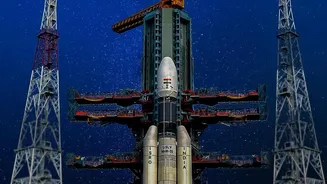
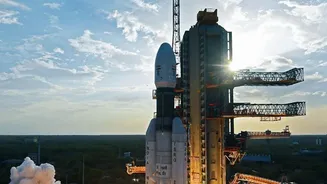
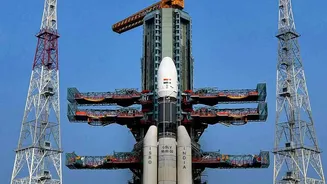
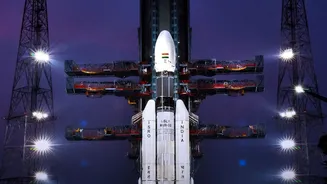
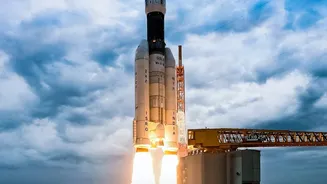
Mastering reusability is not just about keeping up with global trends; it's a strategic imperative for India. Cheaper and more frequent access to space is critical for national security, communications infrastructure, and scientific exploration. It directly impacts India’s ability to expand its own satellite constellations, conduct deep space missions, and realise its goal of sending astronauts into orbit with the Gaganyaan mission. Furthermore, the global launch market is a multi-billion dollar industry. To compete effectively against established players, India must be able to offer launch services at a competitive price point. ISRO’s planned Next Generation Launch Vehicle (NGLV) is being designed with partial reusability in mind, aiming to bring down the cost per kilogram of payload significantly. The combination of ISRO's experience and the agility of private startups places India in a strong position to become a major player in this new era of space exploration.