






Architecture Born from Necessity
For centuries, life in the arid and semi-arid regions of western and northern India was dictated by the availability of water. The monsoon brought torrential rains for a few months, followed by a long, dry season that saw rivers shrink and the water table
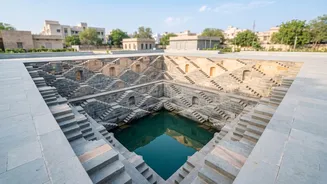
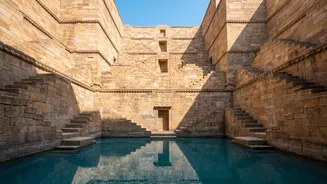
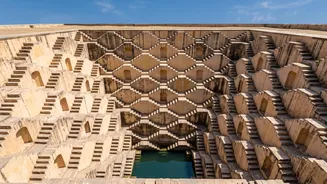
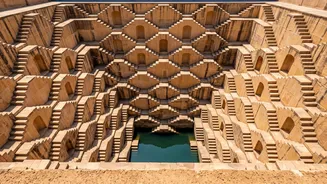
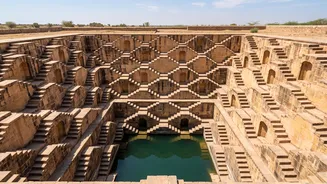
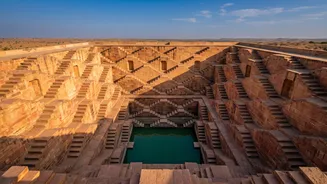
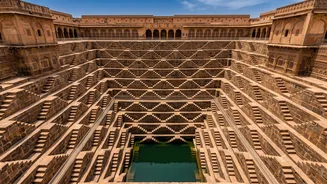
plummet deep into the earth. Standard wells often ran dry. The solution was as elegant as it was practical: instead of just digging down, builders excavated vast, multi-storied structures with stairs leading down to the water. Known as 'vavs' in Gujarat and 'baolis' or 'baoris' in Rajasthan and northern India, these stepwells ensured that communities could access groundwater no matter how much the water level fluctuated throughout the year. As the water receded, people could simply walk further down the steps to reach it.
An Inverted Temple of Stone
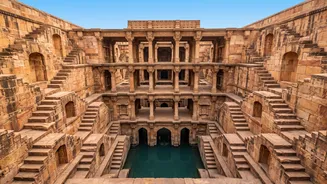
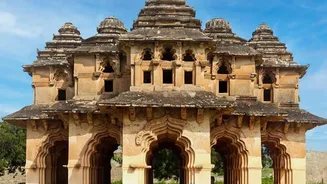
Stepwells were engineering marvels that inverted traditional architecture, building downwards into the earth instead of up into the sky. The earliest rock-cut stepwells date back to between the 2nd and 4th centuries AD, with the practice flourishing from the 11th to the 16th century. These structures range from simple, linear trenches with steps to complex, multi-level edifices with ornate pavilions, galleries, and intricate carvings. Chand Baori in Rajasthan, for example, descends 13 stories into the ground with 3,500 perfectly symmetrical steps. Many were built using a trabeate system of stone posts and beams, while others featured grand arches. This subterranean design not only provided access to water but also created a naturally cool environment, offering respite from the scorching summer heat.
Where Engineering Met Community
Stepwells were much more than utilitarian water sources; they were the vibrant heart of their communities. Their cool, shaded pavilions served as social gathering spots, particularly for women, who would meet there while collecting water. They also functioned as safe havens for travellers and pilgrims on long trade routes, providing a place to rest and water their animals. Commissioning a stepwell was considered a great act of philanthropy, often undertaken by royalty (frequently queens), wealthy merchants, or powerful figures as a service to their people or as a memorial. Consequently, many were adorned with elaborate sculptures depicting deities, mythological scenes, and everyday life, turning them into breathtaking underground art galleries and functioning temples.
The Decline of a Water Legacy
Despite their ingenuity and central role in society for over a millennium, the tradition of using and building stepwells went into a steep decline. During the British Raj, colonial authorities viewed the open pools of water as unhygienic and potential sources of disease. They began to discourage their use, favouring modern systems like hand pumps and, eventually, piped water. As villages got taps, the communal need for the stepwell vanished. Stripped of their primary function and social importance, thousands of these architectural masterpieces were abandoned. Over time, many fell into disrepair, were used as garbage dumps, or simply crumbled from neglect.
Lessons for a Thirsty Future
Today, as modern India faces critical water shortages due to groundwater depletion and erratic climate patterns, these ancient structures are being seen in a new light. Conservationists, architects, and government bodies are leading efforts to restore stepwells across the country. Cleaning and desilting these structures has been shown to recharge local aquifers by capturing monsoon runoff, which helps raise the water table. The restoration of the 17th-century Bansilalpet stepwell in Hyderabad, which involved removing tonnes of garbage, brought it back to life as a source of clean water for the first time in decades. These projects demonstrate that stepwells are not just historical relics, but are a form of time-tested, sustainable water management that can offer valuable lessons for ensuring water security in the 21st century.