


A New Galactic Surveyor
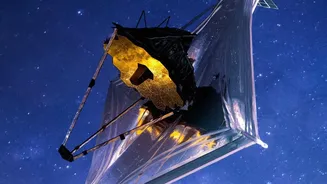
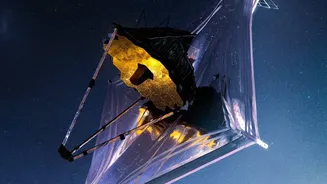
Launched in August 2026, the Nancy Grace Roman Space Telescope is NASA's next-generation flagship observatory, joining the ranks of the agency's most ambitious scientific instruments. After reaching its operational orbit a million miles from Earth, the telescope
has spent the subsequent months in a commissioning phase, calibrating its systems and taking its first test images. By early October 2026, both of its main instruments had successfully detected starlight for the first time, a major milestone confirming the hardware survived its journey into space. While the first official science images are not expected until early 2027, the telescope is already demonstrating incredible pointing precision, a crucial requirement for its long and ambitious mission to unravel some of the universe's biggest secrets.
The Power of the Wide View
Roman's primary advantage is its immense field of view. Its main camera, the Wide Field Instrument, can see a patch of sky 100 to 200 times larger than Hubble’s infrared instrument can in a single snapshot. This panoramic capability is revolutionary. Imagine trying to create a map of a massive city by taking photos through a keyhole; that’s the challenge faced by telescopes designed for deep, narrow observations. Roman, by contrast, takes a wide-angle photo of an entire city block at once. This incredible efficiency means that a deep-sky survey that would have taken the Hubble telescope decades to complete can be accomplished by Roman in just a matter of months. Its 300-megapixel camera will generate enormous, data-rich images, allowing scientists to conduct cosmic surveys on an unprecedented scale.
Investigating Dark Energy's Push
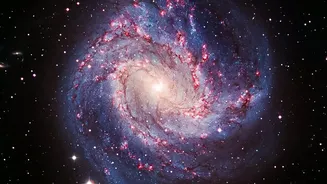
One of Roman’s two primary science objectives is to tackle the mystery of dark energy. Astronomers know that the expansion of the universe is not slowing down but accelerating, as if a mysterious force is pushing everything apart. By systematically mapping the positions of billions of galaxies and tracking thousands of distant stellar explosions known as supernovae, Roman will measure how the universe's expansion has changed over cosmic history. This vast cosmic map will provide the most detailed look yet at the large-scale structure of the universe, offering critical clues about the nature of the dark energy that is responsible for its accelerating fate.
A Census of a Million Stars
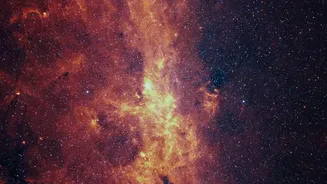
Roman's other main goal is to perform a massive census of planets outside our solar system. Instead of staring at one star at a time, it will monitor hundreds of millions of stars toward the dense, central bulge of our Milky Way galaxy. It will primarily search for exoplanets using a technique called gravitational microlensing. This method detects the subtle way a planet's gravity can bend and magnify the light from a distant background star that passes behind it. This technique is especially effective at finding planets orbiting far from their host star, a population that other methods often miss. Scientists expect Roman to discover thousands of new worlds, from gas giants to small, rocky planets, potentially increasing the number of known exoplanets dramatically.
A Legacy of Vision
The telescope is named in honor of Dr. Nancy Grace Roman, a pioneering astronomer and NASA's first chief of astronomy. A trailblazer who became the first woman to hold an executive position at the agency, Dr. Roman was the driving force behind the Hubble Space Telescope. She championed the idea of a large space-based observatory for years, bringing together the scientists and engineers needed to make it a reality, earning her the title 'Mother of Hubble'. Naming this next-generation wide-field observatory after her is a fitting tribute to a scientist whose vision paved the way for modern space astronomy.