




A Beast in Plain Sight
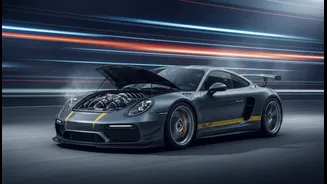
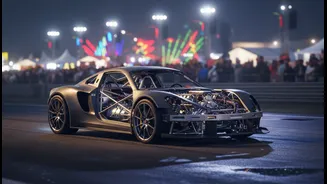
The car in question is a testbed for Ruf's future, a vehicle known internally as the "Erprober," which simply means "Tester." It looks like a modified Ruf CTR3, but it’s been stretched to accommodate something truly special: an entirely new, in-house
developed flat-eight boxer engine. This twin-turbocharged 4.8-litre powerhouse, dubbed the B8, is projected to produce over 1,000 horsepower and more than 737 lb-ft of torque. At an event where manufacturers display their most finished products, Ruf brought a car that is proudly a work-in-progress, letting enthusiasts in on the development process.
What is a Development Mule?
In the automotive world, a "development mule" is a crucial but typically unseen part of creating a new car. Engineers take an existing vehicle and modify it to test new components like engines, suspensions, or software. These cars prioritize function over form, often featuring mismatched parts, exposed wiring, and camouflage to hide future designs from spy photographers. Their job is to endure thousands of kilometres of rigorous testing to ensure new technologies are reliable before they ever reach a production model. Showing a mule to the public is highly unusual; these vehicles are the secret workhorses of the industry, not the show ponies.
The Genius of the Unfinished
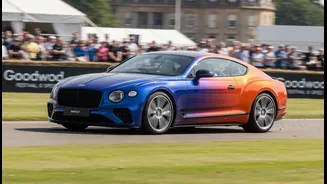
Ruf's decision to run the Erprober up the famous Goodwood hillclimb was a masterstroke. Piloted by famed driver Tanner Foust, the car wasn’t just a static display; it was a screaming, visceral demonstration of Ruf's engineering ambition. Spectators were treated to the unique sound and awesome potential of the new flat-eight engine. Rather than hiding their development process, Ruf celebrated it. This act of transparency turned the car into one of the most talked-about vehicles at the festival. It was a bold statement that in a world of digital renders and curated perfection, the raw, mechanical truth of a car's creation is a powerful story in itself.
A Nod to the Past, A Roar into the Future
The mule's special livery, designed by Aloisa Ruf, even pays tribute to the company's most iconic creation, the CTR "Yellowbird." This connects the brand’s storied past with its boundary-pushing future. By debuting a flat-eight—an engine configuration with a rich motorsport history but never used in a production car in this way—Ruf is once again charting its own course. Alois Ruf himself stated that this moment defines the company's future, writing a new chapter in automotive history. This wasn't just a test run for a new engine; it was a public declaration of the passion and confidence that has defined the Ruf name for decades.