







An Uncompromising Track Titan
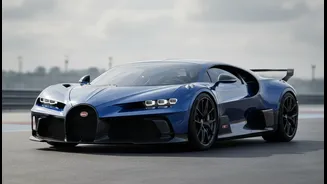
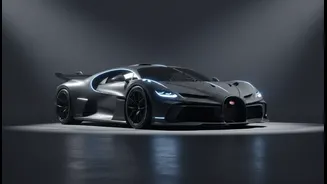
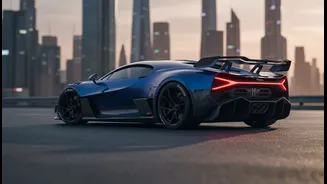
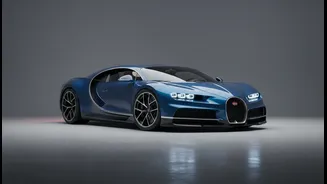
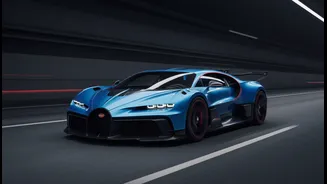
First, it helps to understand what the Bugatti Bolide is. Unveiled as a track-focused hypercar, it’s the final, most ferocious showcase for Bugatti’s legendary 8.0-litre quad-turbocharged W16 engine. With up to 1,825 horsepower in its concept form and a dry
weight of just over 1,240 kilograms, it was engineered with a single purpose: to dominate a racetrack. Bugatti itself designed the Bolide as a track-only vehicle, meaning it was never intended to deal with the realities of public roads, like speed bumps, potholes, or legal requirements like conventional headlights. With only 40 units produced, it represents the absolute pinnacle of internal combustion engineering, a true collector's item for the circuit.
The Headlight Conundrum
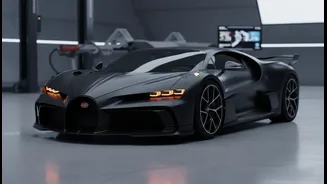
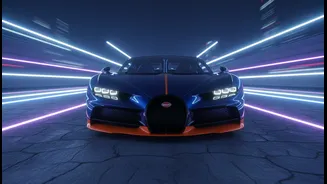
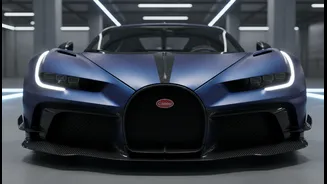
The biggest challenge in making the Bolide road-legal was its face. The car's aggressive front end is defined by a dramatic X-shaped motif, with deep voids and complex aerodynamics. There are no traditional headlight housings. For track use, this is fine, as circuits are typically illuminated. But for road use, headlights are a legal necessity. The problem was how to integrate them without drilling into the carbon-fibre bodywork and spoiling the car’s signature look. Any clumsy, tacked-on solution would compromise the very aesthetic that makes the Bolide so special. It required a solution as bespoke and meticulously engineered as the car itself.
Lanzante's Seamless Solution
Enter Lanzante, a British firm with a world-class reputation for converting track-only monsters into road-legal machines. Instead of trying to fit a conventional headlight unit, Lanzante engineered custom LED headlights that are seamlessly integrated into the existing X-shaped front fascia. This clever piece of engineering preserves the car’s aggressive and hollow front-end design, making the crucial additions almost unnoticeable at a casual glance. The result is a car that meets legal lighting requirements while retaining the wild, futuristic character that defines the Bolide. It’s a solution that respects the original design, a hallmark of Lanzante's work.
More Than Just Lights
Achieving road legality involved more than just adding lights. Lanzante had to undertake a host of other modifications. The suspension, originally set up for smooth racetracks, was reworked to handle real-world road surfaces and speed bumps. The original Michelin racing slicks, which famously last only a few dozen miles, were swapped for more durable road-compliant tires. Other changes included adjustments to the cooling system, emissions components, and drivetrain mapping to ensure the Bolide is genuinely usable on public roads, not just technically legal. Fortunately, Lanzante noted that the core engine and user-friendly gearbox were a good starting point for the conversion.
The Masters of Conversion
This kind of audacious project is familiar territory for Lanzante. The firm famously converted the Le Mans-winning McLaren F1 GTR for road use and has since applied its expertise to a stable of other track-only legends, including the McLaren P1 GTR, Pagani Zonda R, and Porsche 935. The company has carved out a unique niche in the hypercar world, catering to collectors who want the ultimate expression of performance without being confined to the track. Their work on the Bolide, which debuted at the 2026 Goodwood Festival of Speed, is perhaps their most extreme project yet, cementing their reputation as the go-to specialists for making the impossible possible.