




Why A Plane Might Descend Urgently
An emergency descent is a maneuver designed to get the aircraft to a lower altitude as quickly and safely as possible. It is not an uncontrolled fall. The two most common reasons for this are a fire on board or, more frequently, a loss of cabin pressurization.
Commercial aircraft fly at high altitudes where the air is too thin to breathe. To keep passengers and crew comfortable and safe, the cabin is pressurized to simulate an altitude of around 8,000 feet. If the cabin loses this pressure, the crew must bring the plane down to an altitude of about 10,000 feet, where the air is dense enough to breathe without supplemental oxygen.
The Passenger Experience
A sudden loss of pressure, known as a rapid or explosive decompression, can be dramatic. Passengers may hear a loud noise, feel a rush of cold air, and see a fog or mist form in the cabin as the temperature and pressure drop. Almost instantly, oxygen masks will deploy from the ceiling. The aircraft will then begin a steep, fast descent. While this feels alarming, it's a clear sign that the pilots are in control and executing a life-saving plan. The physical sensations—like ears popping and feeling breathless before putting on a mask—are normal physiological reactions to the change in pressure.
A Highly Practiced Maneuver
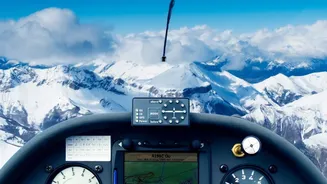
Pilots practice emergency descents repeatedly in simulators as part of their training. The procedure is a memory item, meaning the initial critical steps are performed from memory without consulting a checklist. The crew will immediately don their own oxygen masks, reduce engine power to idle, and often deploy speed brakes or other drag devices to increase the rate of descent without exceeding the aircraft's structural speed limits. They will also typically enter a turn of 30 to 45 degrees. This helps increase the descent rate and allows pilots to scan for other air traffic below them while looking for a suitable place to land if necessary.
The Crew's Coordinated Response
During an emergency descent, the entire crew has a role. In the cockpit, one pilot flies the aircraft while the other communicates with air traffic control, declaring an emergency and coordinating a clear path for the descent and a potential diversion to the nearest suitable airport. In the cabin, flight attendants are trained to secure the cabin, instruct passengers, and move through the aisles on portable oxygen to assist anyone having trouble. Their primary role is to ensure passengers get their masks on quickly and stay seated and calm. Their presence is a key part of managing the situation effectively.
What You Should Do
If you ever find yourself in this situation, the most important rule is to put your own oxygen mask on immediately before helping others. The 'time of useful consciousness' at high altitude can be less than a minute without supplemental oxygen. Secure your mask, pull the strap tight, and breathe normally. It may not feel like oxygen is flowing, but it is. Stay in your seat with your seatbelt fastened. Listen carefully to the instructions from the cabin crew. While the experience is jarring, remember that the sudden descent is a sign that a well-trained crew is taking decisive action to get everyone to a safe altitude.